Birding in Dosdewa-Assam
- With JungleHike Tours
- November 25 to 30, 2025
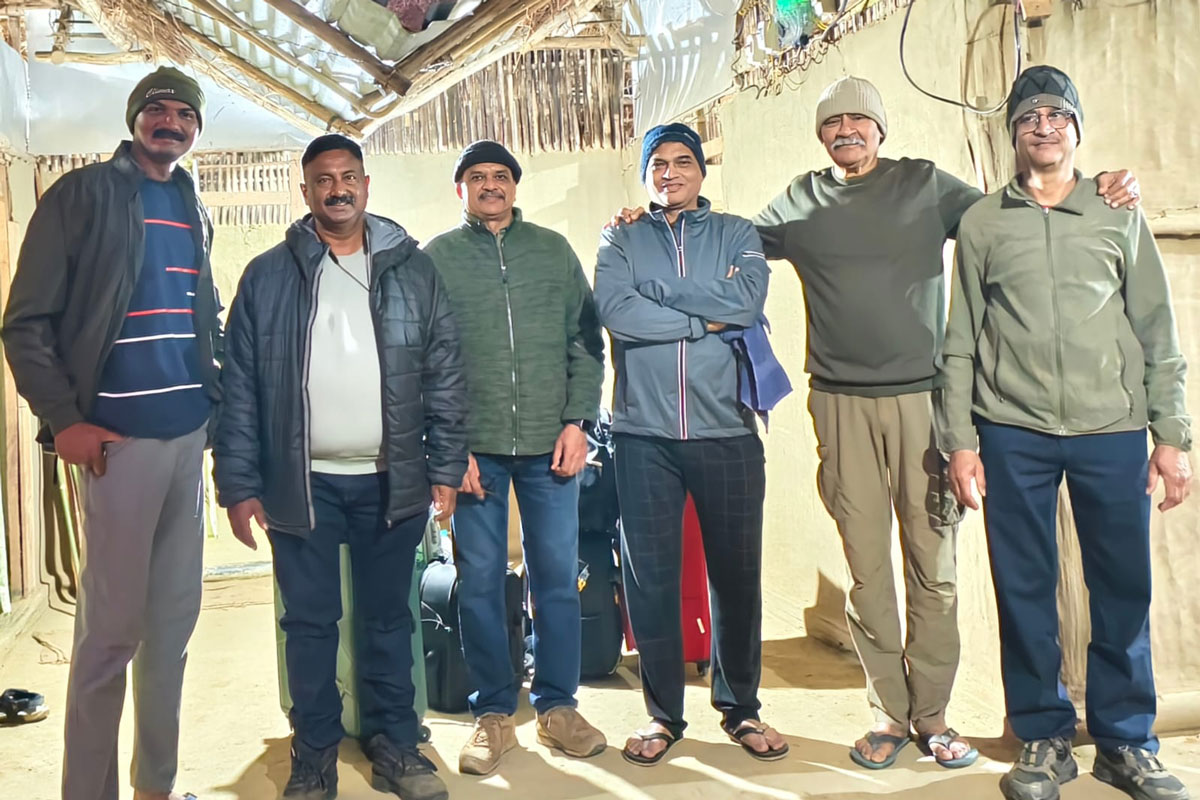
Preamble
This lesser-known region of Assam has entered the birding map only in the last five to six years. The Sribhumi district (earlier Karimganj), bordering the Cachar region, remained largely unexplored for a long time. In recent years, however, it has gained attention for hosting some highly sought-after winter visitors. Species such as the Asian Stubtail and Siberian Blue Robin—rare across most of the country—are possible here during the November–January window. The region also offers a chance to see Van Hasselt’s Sunbird, the last remaining sunbird species I was yet to photograph in India.
With this in mind, a trip to Karimganj had been on my radar for some time. Unfortunately, I had missed the previous two seasons, cancelling at the last minute on both occasions. November 2025 finally presented an opportunity. Most birders prefer December or January, as some migrants arrive late and November sightings can be uncertain. But given my other commitments, this was the only viable window—and I decided to take the chance. Whether that gamble paid off, or whether November proved too early, would soon become clear.
Finally, in Dosdewa
My earlier travels in Assam had taken me through the well-known gateways of Guwahati and Dibrugarh. This time, however, the destination was Silchar—a small military airport close to the Bangladesh border. The trip was organised by my friend Avinash, an experienced birder who had already set up camp at Dosdewa. His plan was ambitious: a continuous 20-day stay, hosting four different batches of birders for five days each.
I left Mumbai on a red-eye flight just past midnight, with a short halt at Kolkata, and was scheduled to reach Silchar by early morning. Three of my friends had arrived a day earlier and had already begun their journey to Dosdewa. From Kolkata to Silchar, I was joined by Captain Upadhyay, who was travelling in from Delhi.
Our Indigo flight, expected to land by 9 a.m., was delayed by about an hour. As a result, we could only begin the road journey around 10 a.m. The drive to Dosdewa took roughly four hours, leaving little time for breakfast en route. With daylight fading early in this part of the country, evening birding typically begins as early as 2 p.m.
The road conditions were reasonable throughout, and we reached Dosdewa village by around 2 p.m. However, reaching the village did not mean reaching our accommodation. Vehicles were parked at a football ground, from where we had to climb about 100 feet up a small hillock to the homestay. Thankfully, help was available to carry our bags.
The facilities were basic, as expected and already communicated in advance. The rooms were constructed with bamboo and mud walls, and each bed was fitted with a mosquito net.
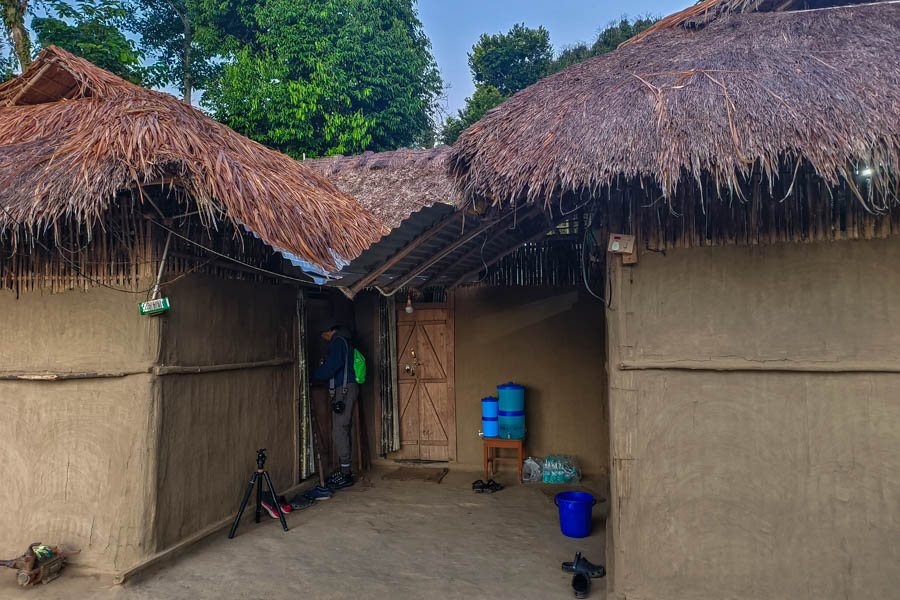
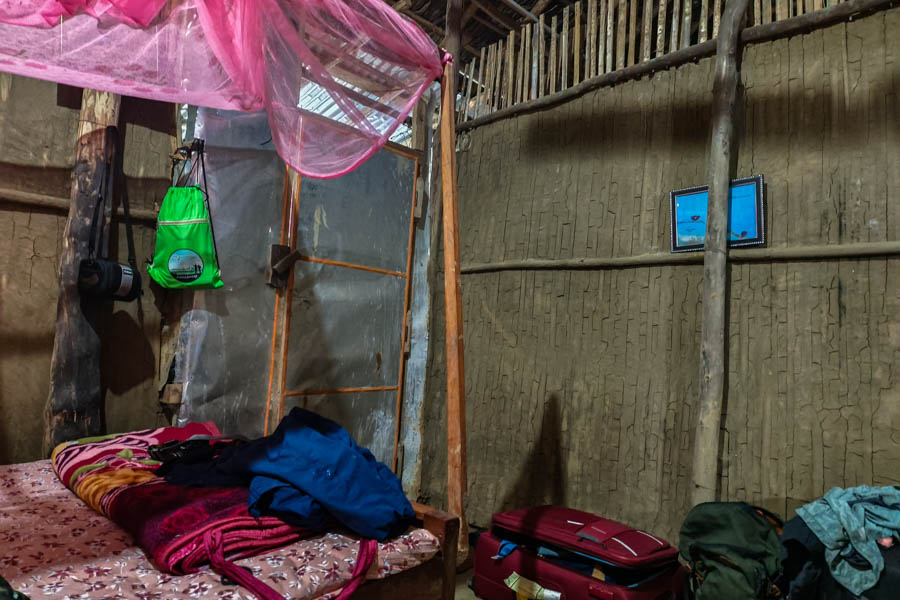
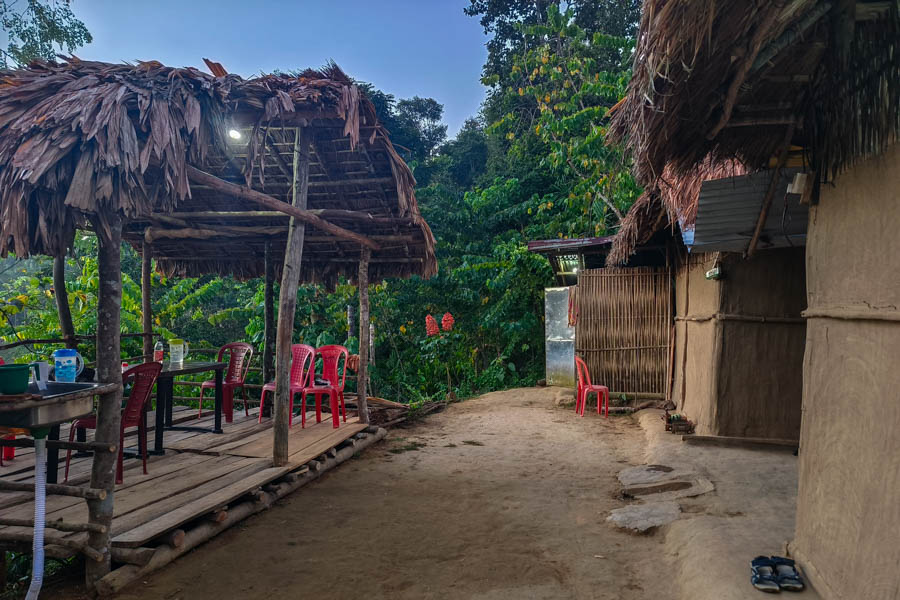
By the time we arrived, the rest of the group had already settled in and were waiting for us. A quick change of clothes, a hurried lunch, and within half an hour we were off for our first birding session.
The daily routine at Dosdewa followed a consistent pattern. Evenings, from about 2 p.m. to 4 or 4:30 p.m., were spent at forest hides—temporary shelters set up near natural waterholes, allowing us to observe birds without being noticed. Reaching these hides involved a walk of one to two kilometres through forest trails, often wading through ankle-deep water.
Morning sessions were dedicated to walking trails around the village and nearby forest patches, targeting species that were unlikely to visit the hides. As we descended from the homestay on the very first outing, I had swapped my shoes for Crocs in anticipation of the waterlogged paths. Ironically, my preparations ended in a rather undignified slip on the slope, resulting in a dusty fall. Thankfully, the camera gear survived unscathed—only my clothes bore the evidence of the mishap.
First Hide Session
We left the homestay a little after 2 p.m., having reached Dosdewa later than planned. Avinash had already briefed us about the walk through the stream, so that part was expected. What I hadn’t fully anticipated was how demanding it would be. Walking through ankle-deep water requires more effort than on dry ground, and one has to be especially careful not to lift the feet too high; any splash could easily put the camera gear at risk.
That afternoon, we headed to Hide #2. The numbering itself is purely for convenience; there are four hides in total, and they have simply been numbered for ease of reference. Over the five days, we visited only Hide #1 and Hide #2, with the sole exception of Nitin ji, who went to Hide #4 on the last day just to see its location.
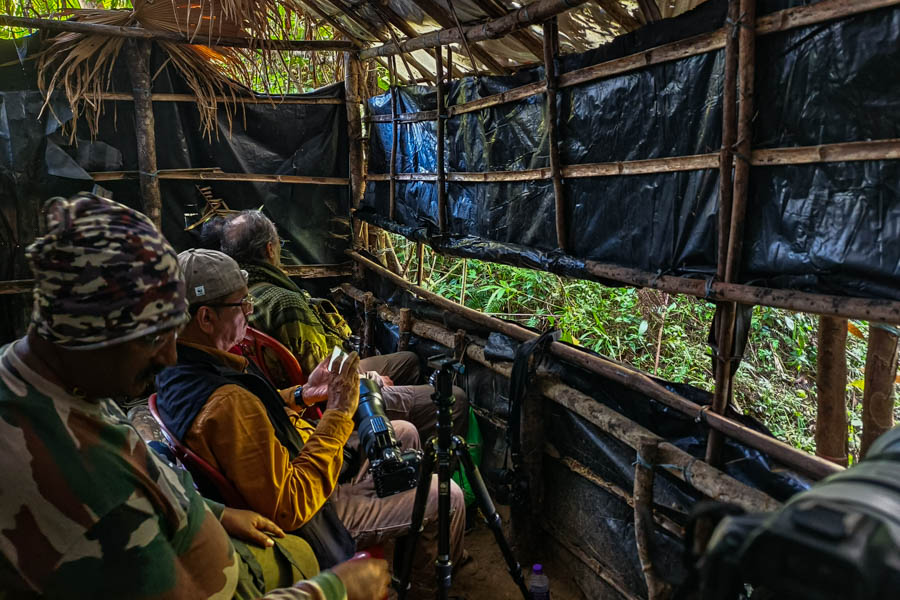
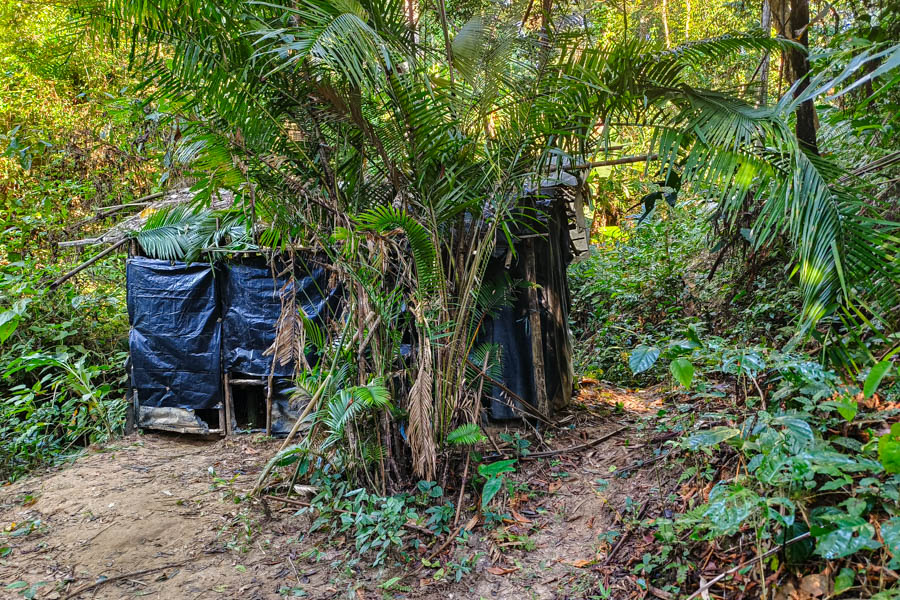
The hide is a simple, makeshift structure with space for five people to sit along a wooden log. There is limited room for tripods, and those not using one typically rest their cameras on the bamboo framework of the hide. This requires sitting close to the frame, which in turn means using chairs. In our group, two of us had tripods, so our helpers carried three chairs from the homestay, as chairs cannot be left unattended at the hides.
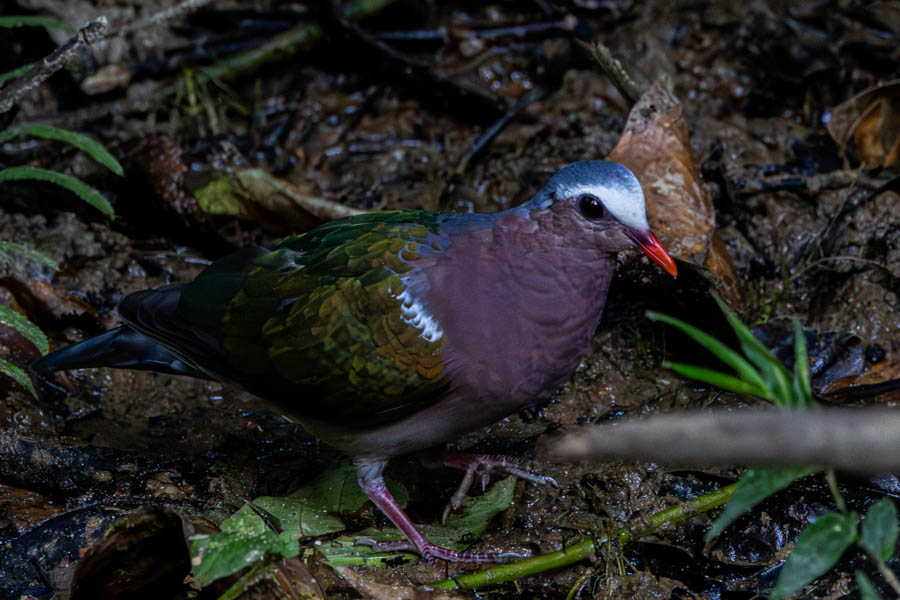
By around 2:45 p.m., we were settled inside after adjusting tripod heights and fine-tuning camera settings for the available light. Inside the hide, the primary instruction is to keep conversation to an absolute minimum, as birds here are extremely sensitive to sound. The first visitor to the waterhole was an Emerald Dove. Although not a rare species, it had been a long time since I last saw one. True to its nature, it was cautious, advancing slowly toward the water before retreating into the dense undergrowth within a minute.
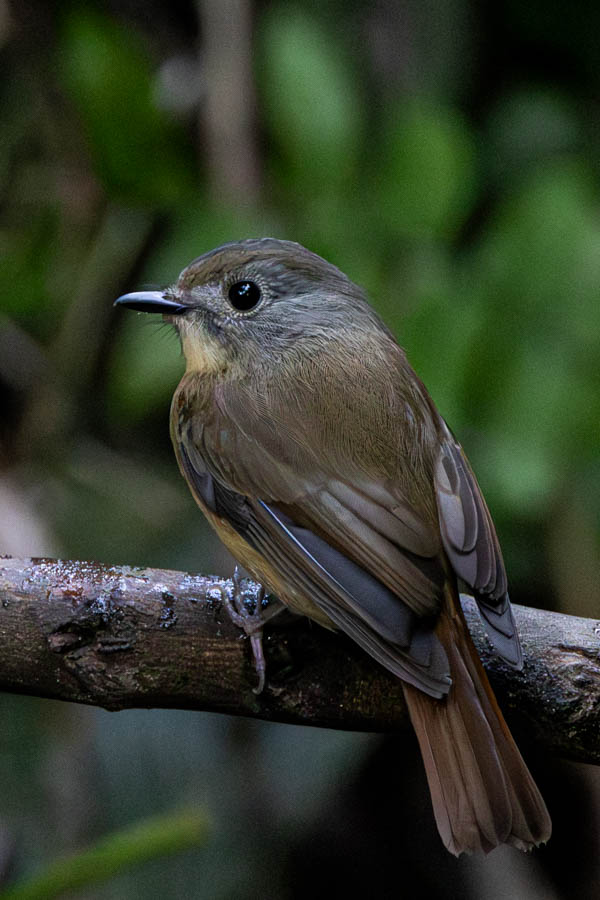
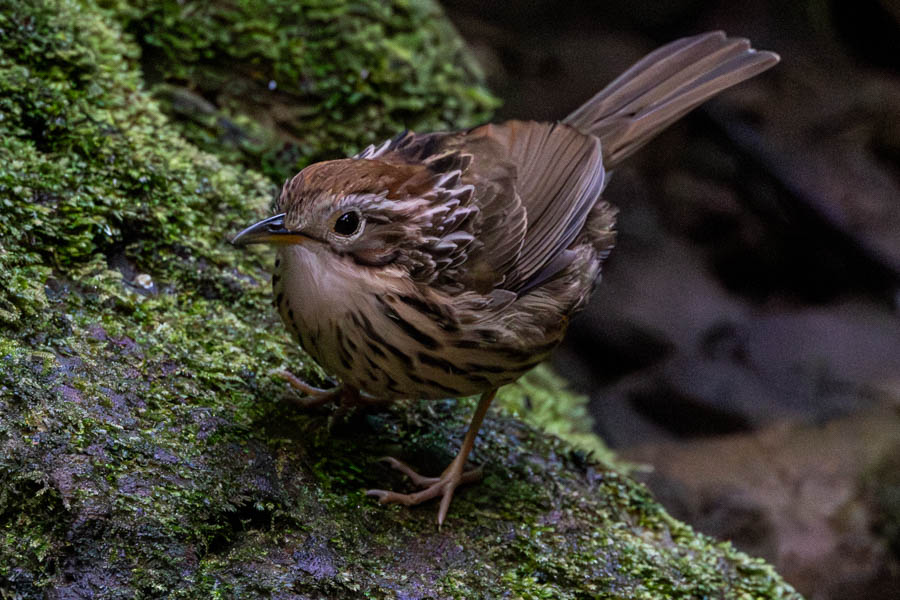
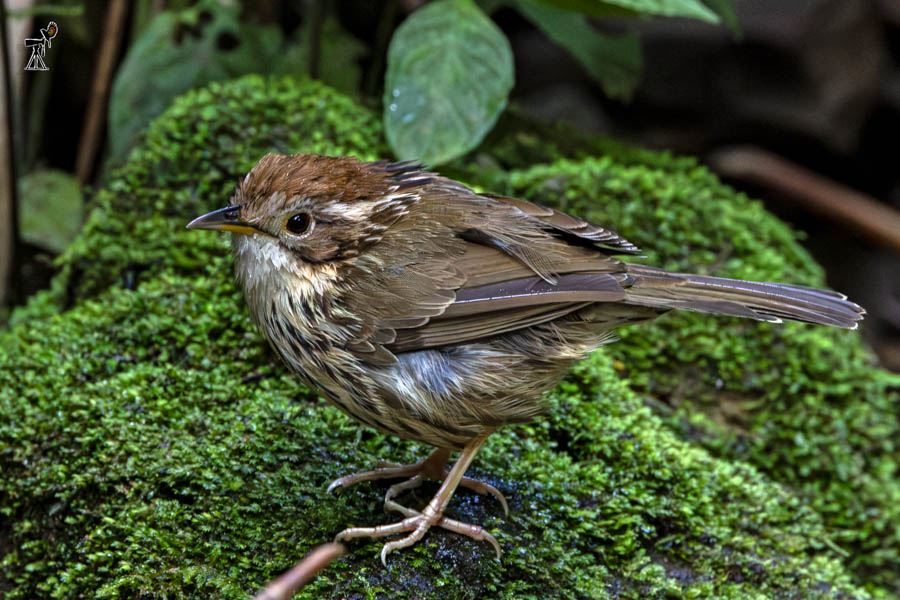
The first bird appeared roughly half an hour after we entered the hide, but once the dove departed, activity picked up quickly. Pale-chinned Flycatcher and Puff-throated Babbler followed in short succession.
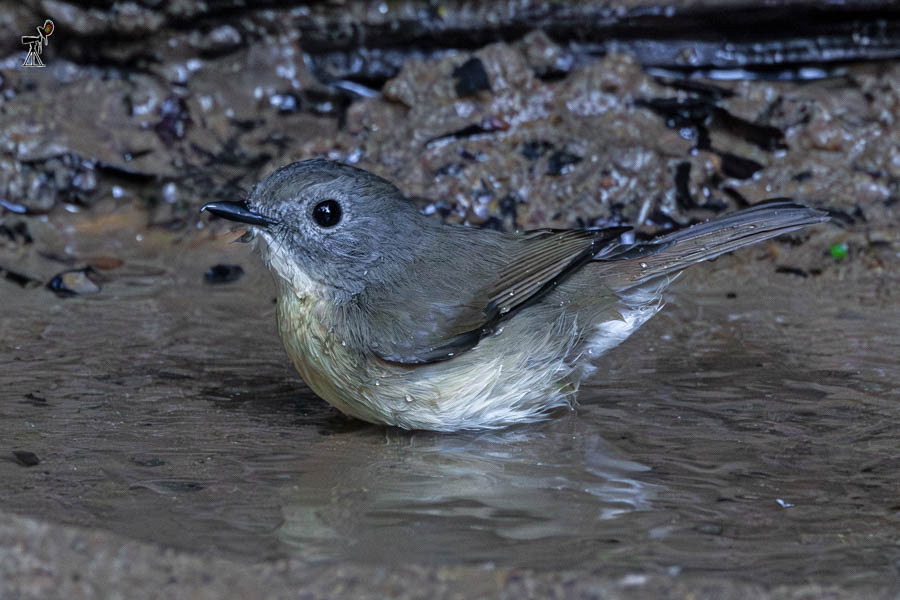
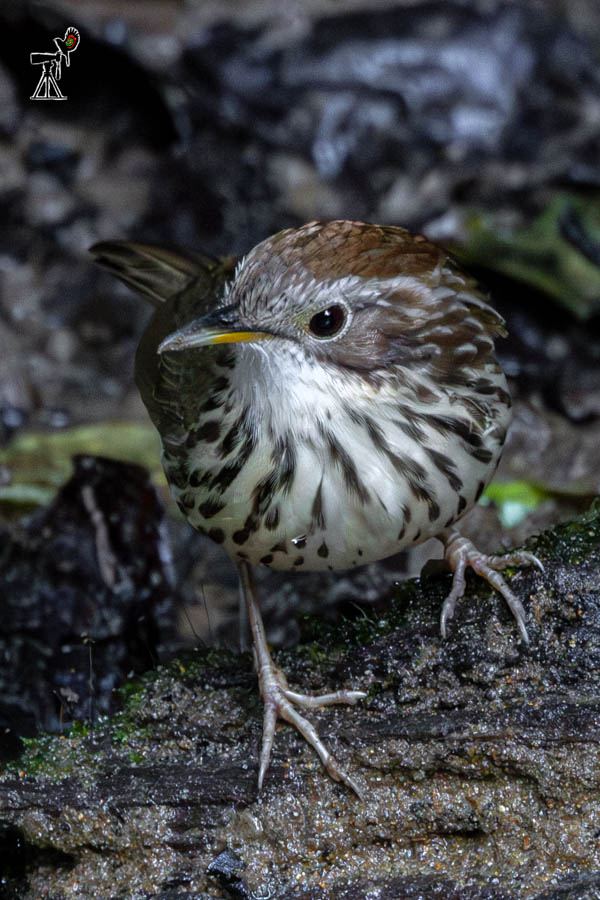
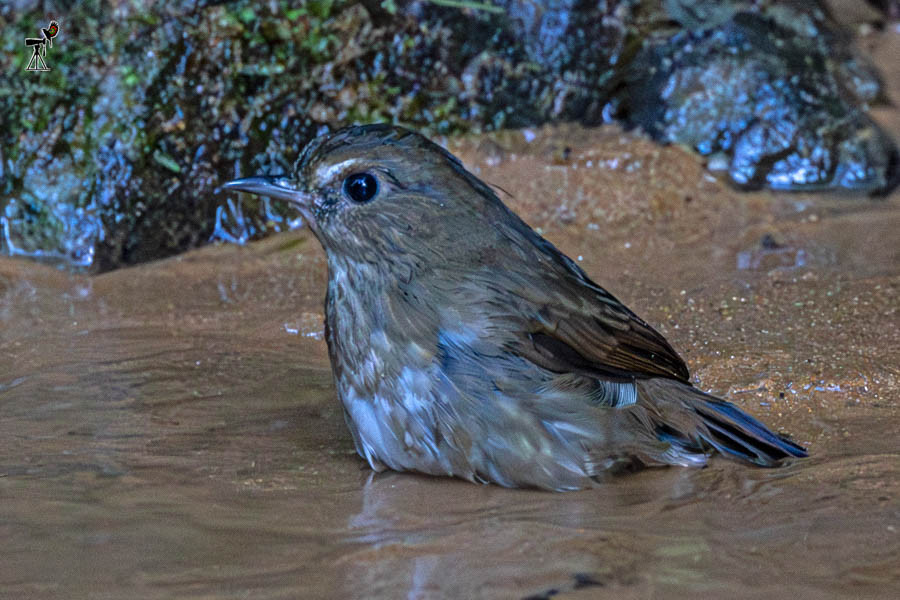
We remained at the hide until about 4:30 p.m., even though the light deteriorated significantly after 4, especially from a photography standpoint. The wait, however, was more than worthwhile. The session produced two much-anticipated lifers for me: the Siberian Blue Robin and the Grey-bellied Tesia, a species that had eluded me for years.
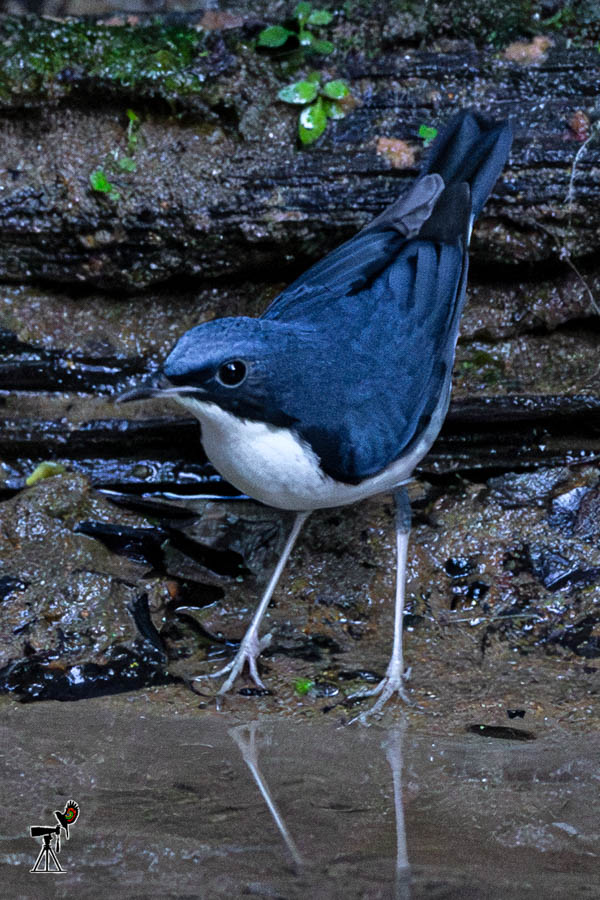
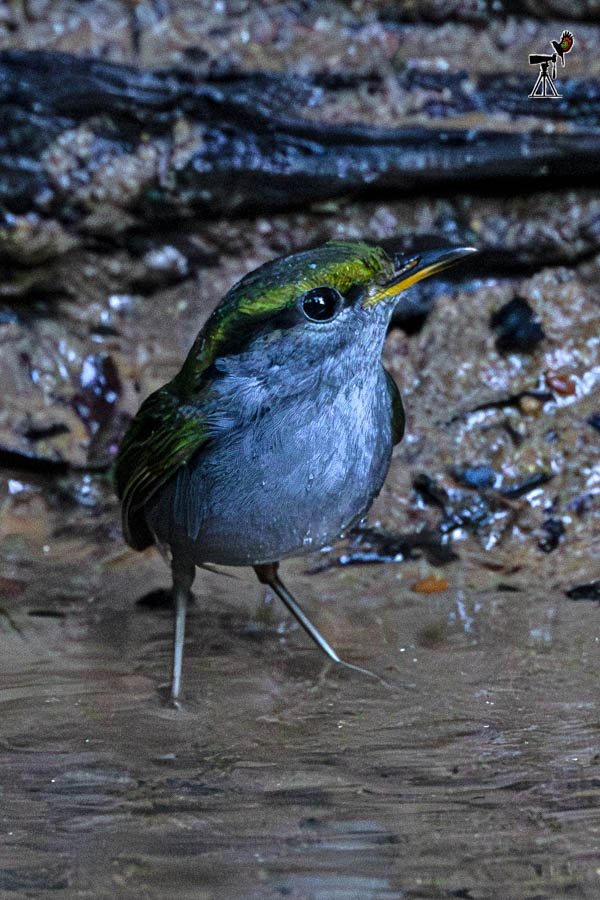
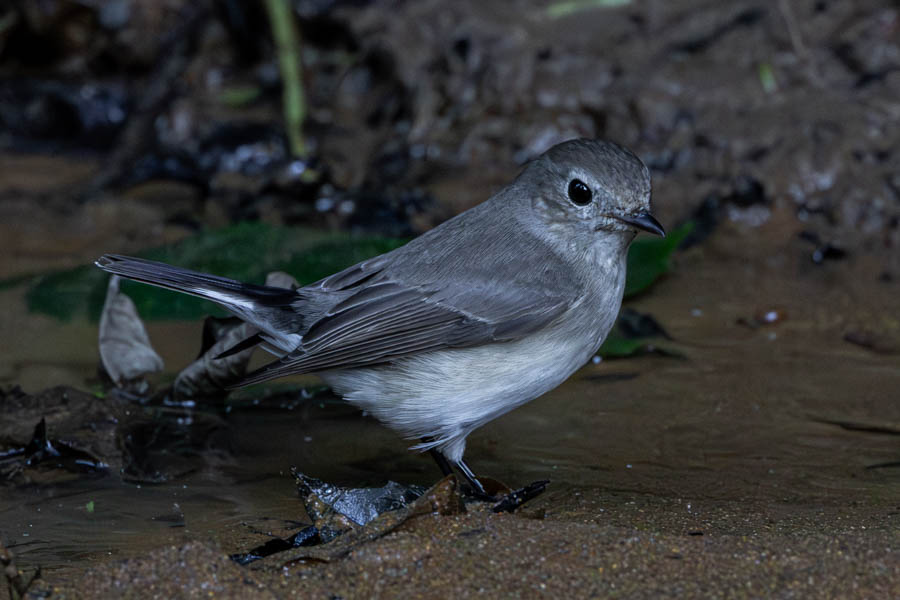
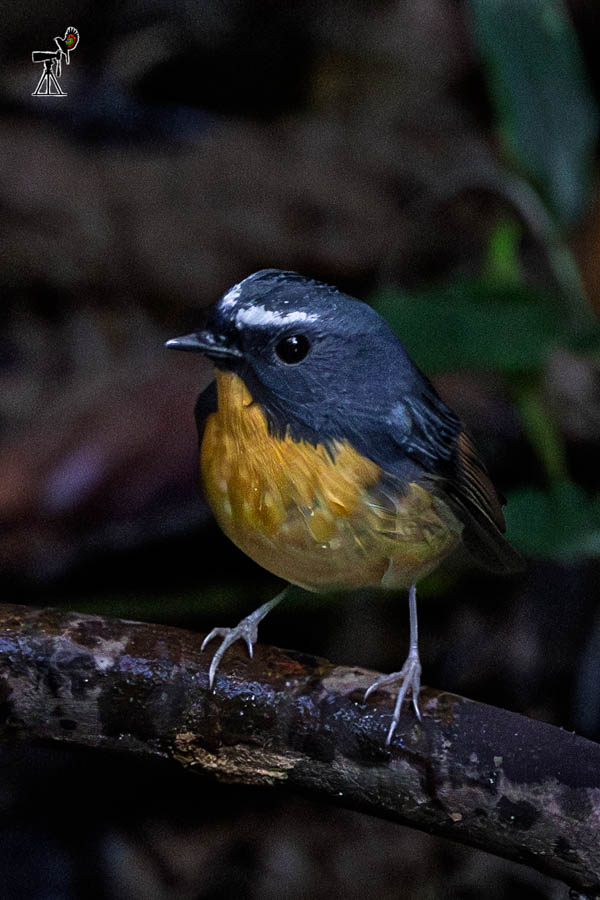
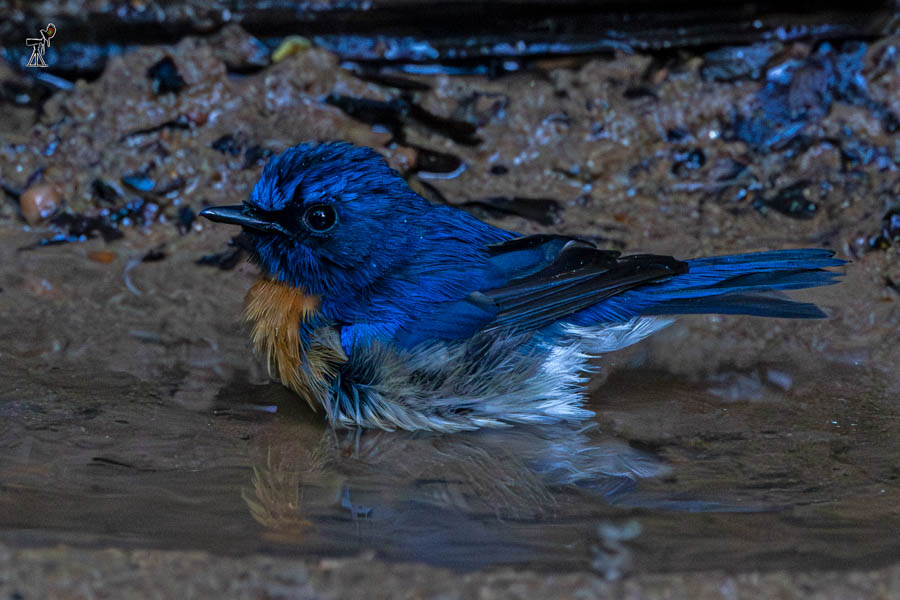
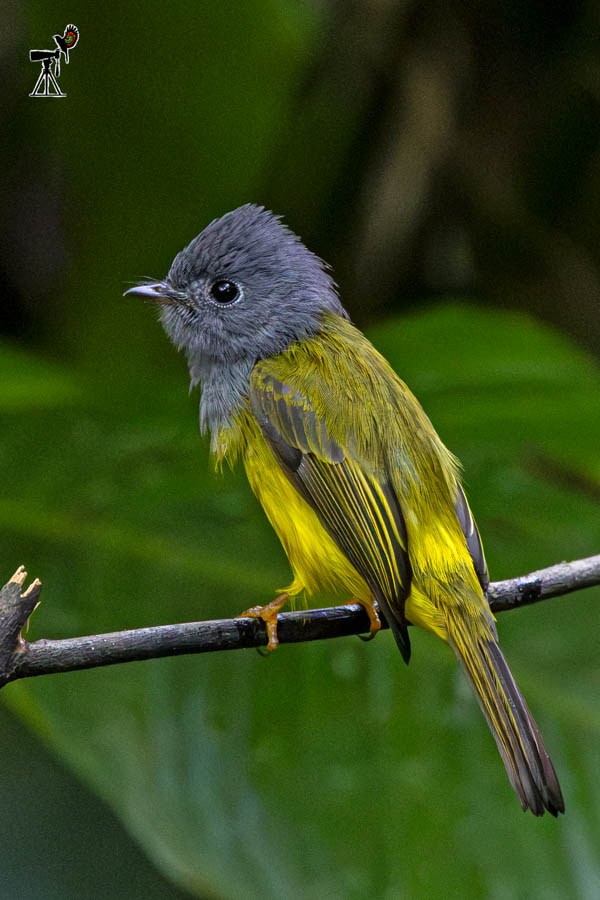
In addition to these highlights, we enjoyed good views of several flycatchers, including Taiga, Snowy-browed, and Blue-throated Flycatchers. The Grey-headed Canary Flycatcher was another notable sighting, and from that point onward, canaries turned out to be the most regular visitors, seen across both hides on almost every day of the trip.
By 5 p.m., we were back at the homestay. While this may sound early, dusk arrives quickly in this region, and it becomes completely dark by then. This rhythm soon became our daily routine: return by 5, tea and snacks, a brief rest, dinner around 7:30–8 p.m., and lights out by about 9:30. Before turning in, we usually discussed the day’s sightings and planned expectations for the next morning’s forest trail.
On this first day, however, fatigue caught up with all of us, and the idea of a night trail—particularly for owls- was unanimously abandoned.
Day 2: 26-Nov – Myna Trail and Hide#1
Mornings, we generally began our day at 6 am (which was a relaxed start for a typical birder, as we are used to starting way earlier). The trails here were not very long; even the farthest points could be reached within an hour. Plus, early mornings were often blanketed in fog (which made photography difficult anyway), necessitating this late start.
By force of habit, we were ready well before our local guide arrived. This gave us some time for a quick selfie. Near the dining area stood a lone flowering tree, and a mantis had likely chosen it as a roosting spot (judging by the dew droplets clinging to its body).
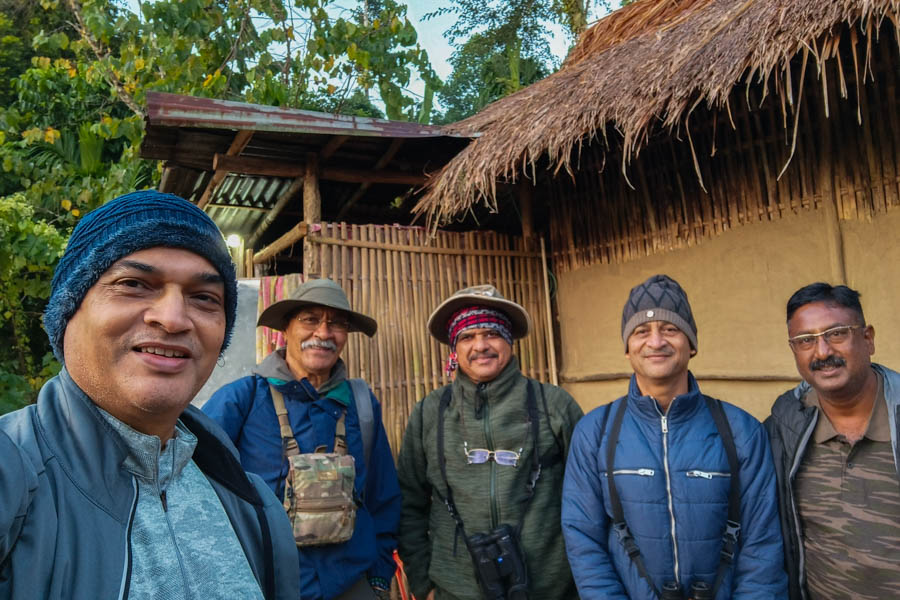
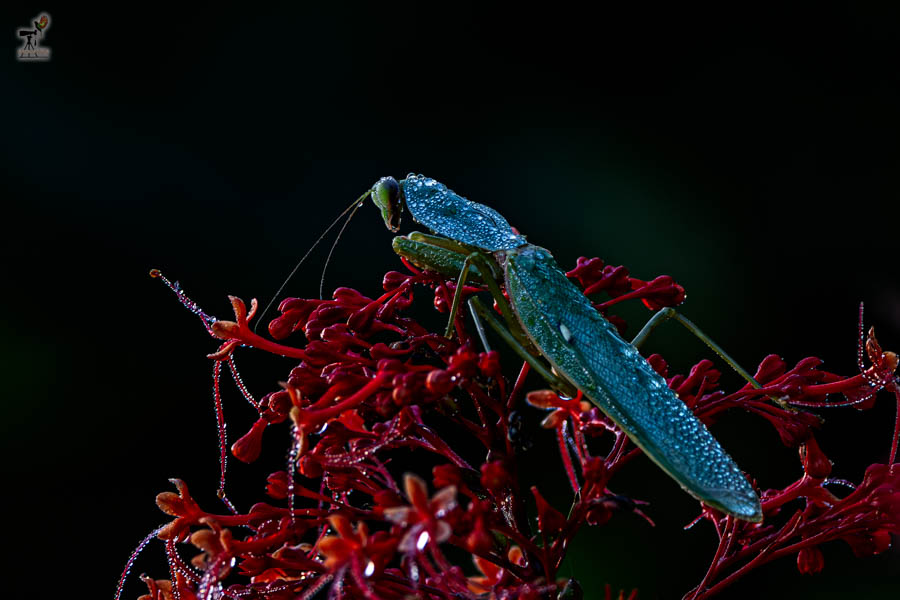
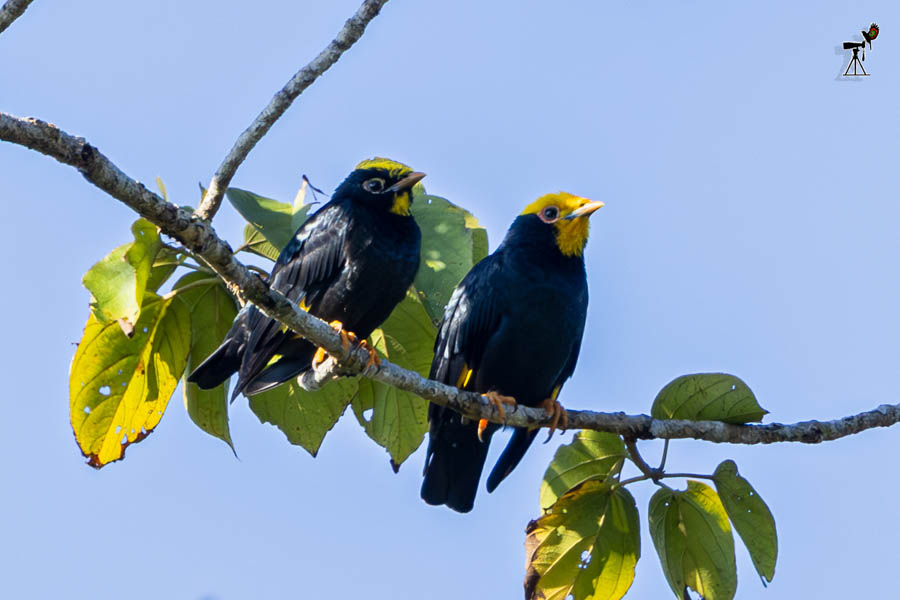
Avinash, who had already spent time here with the previous batch, used that experience to guide our plan for the morning. He took us to a small forest patch on a low hill, where the primary target for the day was the Golden-crested Myna. A fruiting tree on this hill had been regularly visited by a myna flock over the past two to three days, making the chances of a sighting quite good. Mynas are loud and conspicuous birds, and once you are familiar with their calls, as Avinash was, their presence rarely goes unnoticed.
The trail up the hill passed through dense forest, and we stuck to a narrow path formed by regular foot traffic. At one point, there was a small opening that offered a partial view of the fruiting tree, and Avinash asked us to wait there. It was slightly early based on the flock’s recent arrival pattern, but we took our positions nonetheless.
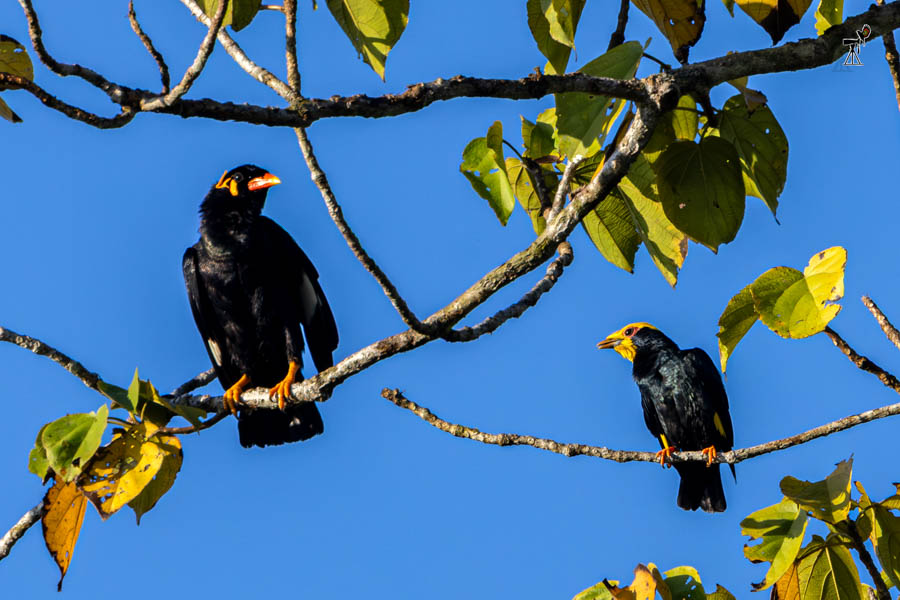
We waited patiently for nearly half an hour, but the mynas failed to appear at first. However, Avinash could hear the calls of Hill Mynas nearby, prompting the local guide to move further along the trail. He soon returned, motioning us to follow. A mixed flock of Hill Mynas and Golden-crested Mynas was feeding at another fruiting tree, though visibility was poor due to heavy foliage. We managed only a few hurried photographs and could clearly make out just a single Golden-crested Myna.
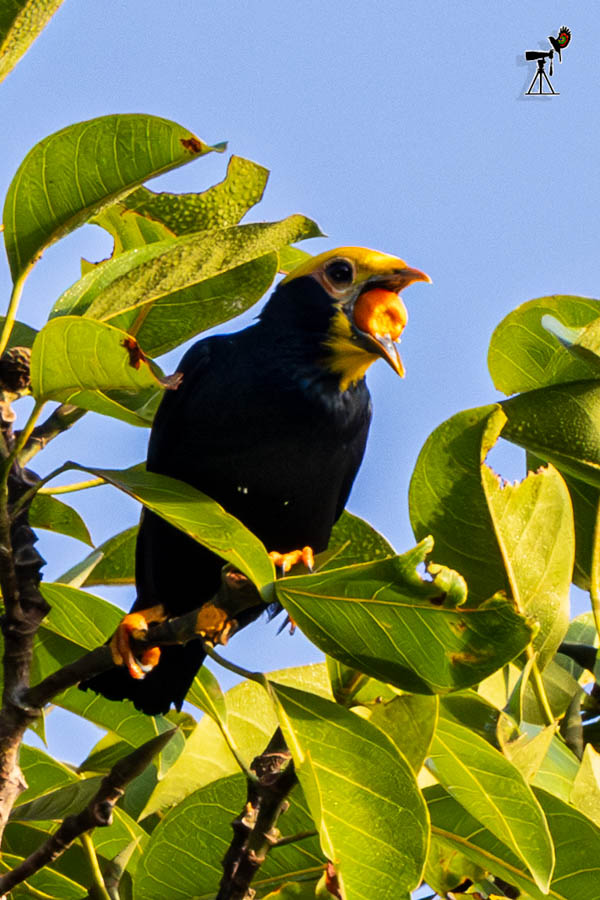
Fortunately, the flock soon shifted to the original tree we had been hoping for. This time, the view was much better, with most of the branches exposed. Although the birds were still at some distance, we were able to focus on a pair perched close together, offering some pleasing poses. Both myna species were present in good numbers here.
Around the same time, we began hearing the loud, distinctive calls of a Large Scimitar Babbler. The calls suggested that the bird was quite close, but despite waiting for over half an hour, it never showed itself.
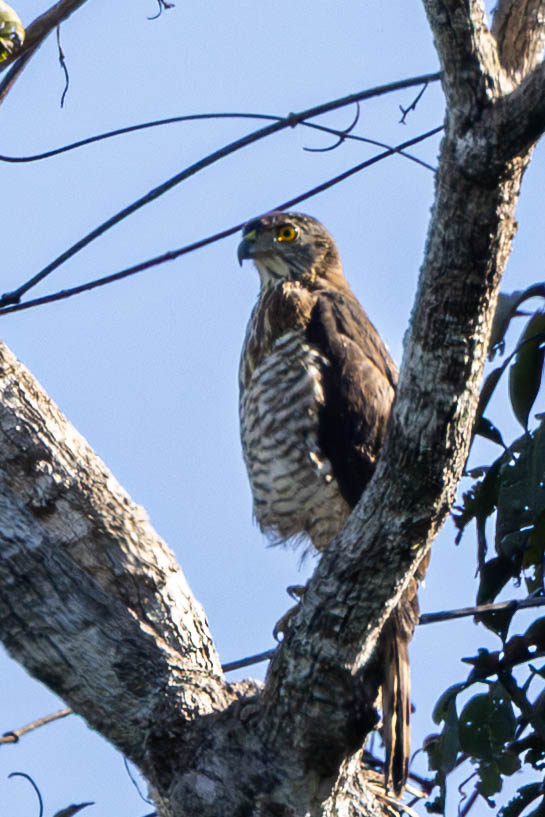
With our primary target accounted for, we decided to explore the Dosdewa village area for additional forest birds. As we descended the hill, Himalayan Swiftlets were already circling overhead, likely feeding on aerial insects. Further along the forest path, a larger bird, possibly a raptor, was seen perched on an obscured branch. After some discussion and careful observation through binoculars, it was identified as a juvenile Crested Serpent Eagle. That morning, we saw another raptor, the Crested Goshawk.
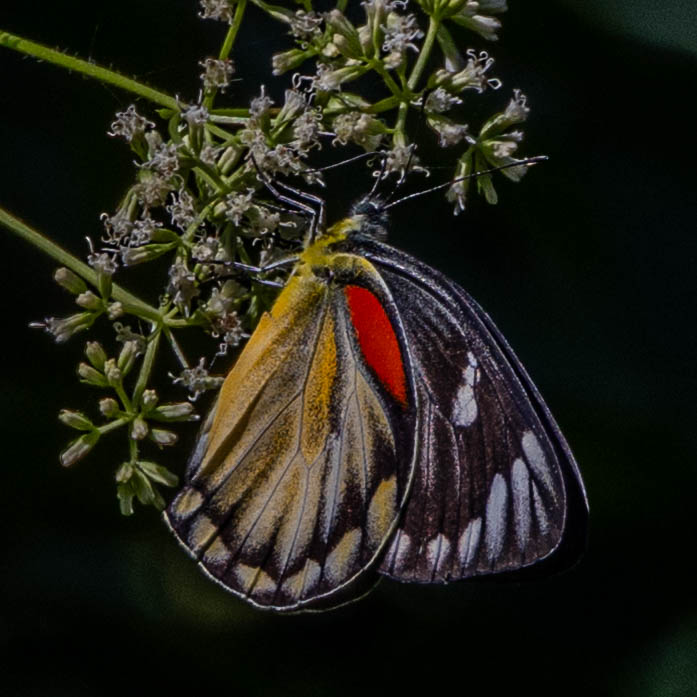
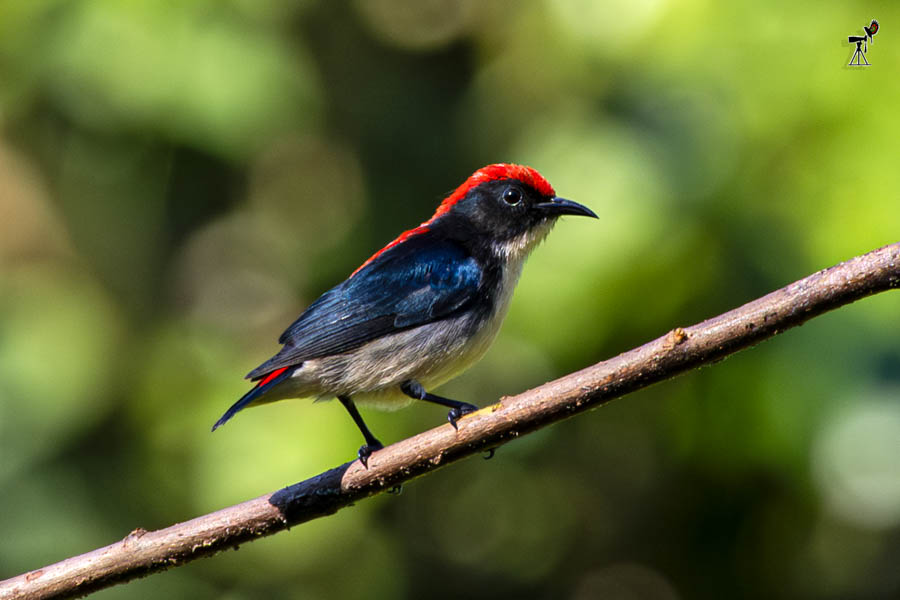
As the sun rose higher, butterflies began to appear, flitting through sunlit patches. On a tall tree ahead, three White-rumped Munias caught our attention, though they were too distant for meaningful photographs. We continued along the trail, encountering more birds along the way. A particular highlight was the brilliantly colored male Scarlet-backed Flowerpecker, which responded to calls and perched on an open branch very close to us, so close that achieving proper focus became a challenge. In the same area, we also noted a Dark-necked Tailorbird and a Taiga Flycatcher.
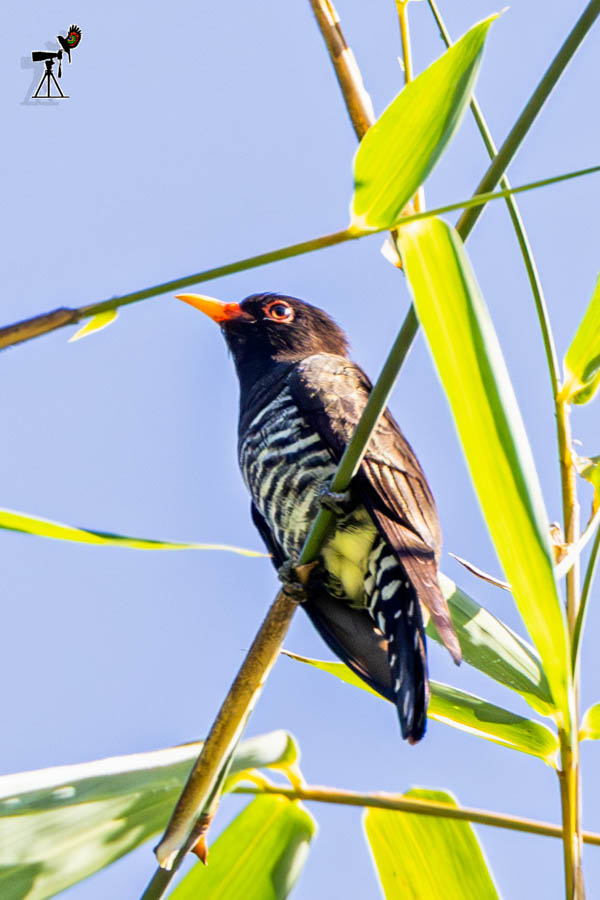
By around 9:15 a.m., we decided to head back towards the homestay. However, the morning still had one last surprise in store. A striking bird perched high on a distant treetop caught our eye—it turned out to be a Violet Cuckoo. The bird remained cooperative and soon moved to a closer tree, allowing us to capture better views before we finally called it a morning.
After lunch, we set out once again for our familiar stream walk, this time heading to Hide #1. Unlike Hide #2, which required a further 200-metre trek through dense woodland on the right side of the stream, Hide #1 lay barely ten metres from the water, tucked away on the left bank soon after the crossing.
The conditions, however, remained unchanged. The light was low, and the seating was hardly designed for comfort during long hours of waiting. But by now, we were mentally attuned to the rhythm of hide photography, patience first, comfort later.
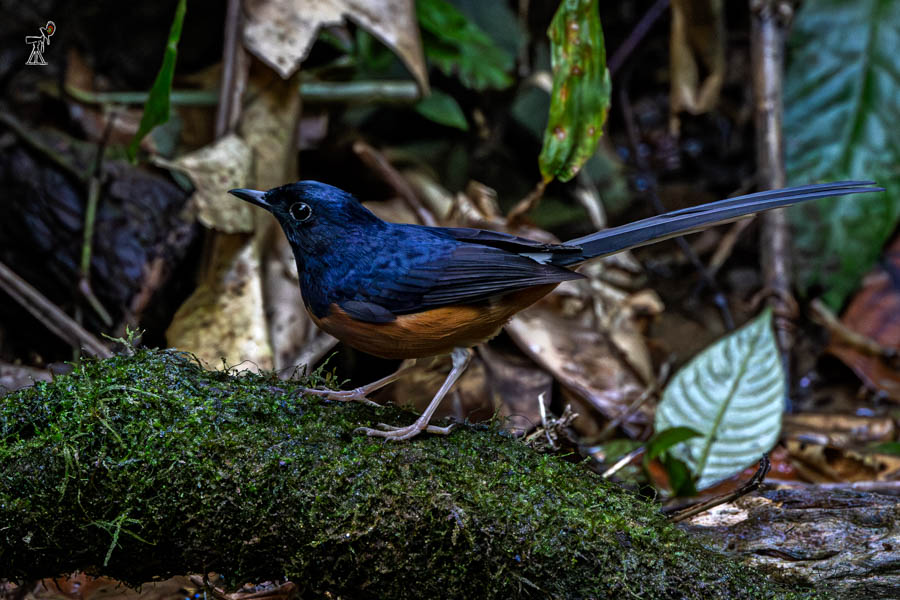
The afternoon began on a high note with a male White-rumped Shama making the first appearance at the waterhole. The female visited much later, offering a quieter but equally welcome sighting. As on the previous day, the Grey-headed Canary Flycatcher dominated the proceedings. Two or three individuals seemed to treat the pool as their personal bathing ground, returning every few minutes and keeping us alert throughout the evening.
Avinash had mentioned that this particular hide offered better chances of spotting the Cachar Bulbul, another much-awaited lifer. Almost on cue, two bulbuls appeared. True to their wary nature, they lingered on a distant perch for several minutes, surveying the surroundings before finally dashing down for a quick drink.
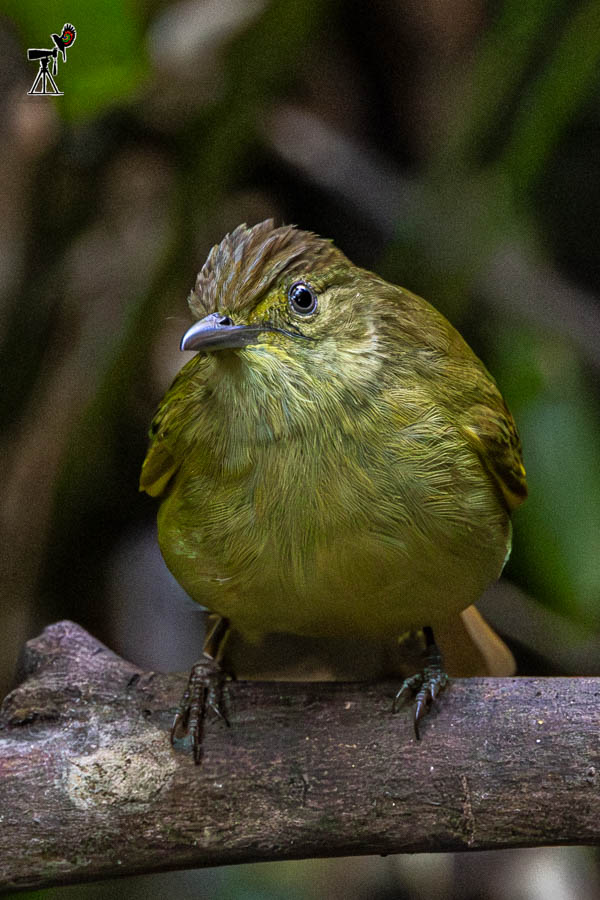
While most species make a brief visit, bathe, sip, and vanish back into the forest, the bulbuls stayed longer than expected, though never letting their guard down. As the evening progressed, activity slowed. A Pale-chinned Flycatcher and a small group of Puff-throated Babblers provided some late highlights, but overall, the forest seemed subdued.
By 4:30 pm, the light had begun to fade, and we made our way back. A welcome cup of hot tea awaited us at the homestay, where we rested and waited for darkness to fully settle. The plan for the night was ambitious: a trail in search of the elusive Oriental Bay Owl. Just a week earlier, Avinash had sighted it with another group, and that memory kept our hopes high.
We delayed our start until after dinner, as a village function below meant songs blaring over loudspeakers. Once the noise subsided a little after 9 pm, we began our ascent along the trail behind the homestay. For over an hour, we combed the hillside in silence, ears tuned for the faintest call. Avinash and the local guide covered considerable ground, moving up and down the slope in a determined fashion. But the forest offered no response that night. By 10:30 pm, we conceded defeat.
Still, with a couple of days remaining in our schedule, the quest was far from over.
Day 3: 27-Nov – Sunbird Trail and Hide#2
We had planned another 6:00 a.m. start, but the hills were wrapped in dense fog, and there was little merit in setting out immediately. The focus for the morning was Van Hasselt’s Sunbird, a regional speciality and, importantly for me, the only sunbird species still missing from my India list. That alone made the wait worthwhile.
After about half an hour, the fog began to lift, and we finally started around 6:30, once again heading uphill along the same trail we had taken the previous night in search of the owl. For ease of reference, I mentally labelled it the “Sunbird Trail.”
Our destination lay beyond the ridge, on the far side of the hill where a small lake sat quietly amid the forest. A few fruiting and flowering trees there were known to be regular feeding grounds for the sunbirds, and we hoped the birds would follow their usual routine.
Partway up the trail, the forest suddenly erupted with calls. We had encountered a classic mixed-species hunting flock—small birds moving together in a loose wave, systematically foraging as they progressed in one direction, either climbing from the valley or descending the slope. This particular group included Rosy Minivets, a Streaked Spiderhunter, Yuhinas, and a few warblers. It was lively and engaging, but most of the activity was high in the canopy, making meaningful photography a challenge.
By 7:45, we reached the lakeside. The fog had completely cleared, replaced by a strong, unrelenting sun. Then began the familiar routine of waiting. For nearly thirty minutes, there was no visible movement around the flowering trees, though our guides remained confident. With the narrow pathway offering little room to explore, lake water on one side and shrubs and small trees on the other, we passed the time with some snacks we had carried along.
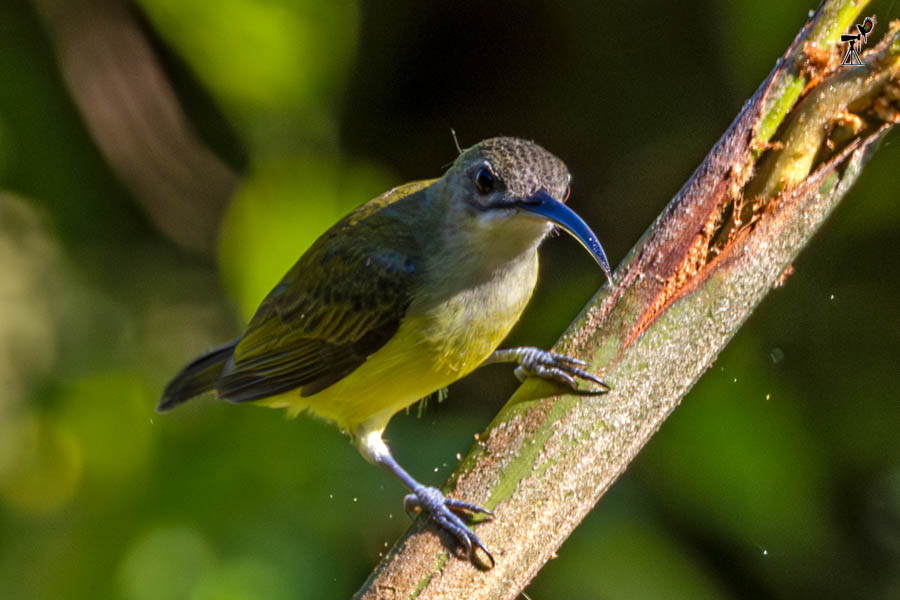
At around 8:15, the first sign of action appeared when a spiderhunter visited the flowering tree. As we concentrated on photographing it, Avinash quietly signalled the arrival of the sunbirds. Three or four individuals, including a female, had slipped into the foliage.
Initially, they kept their distance, so we remained still and silent. Gradually, they moved closer, hopping between blossoms and pausing briefly to nectar. For the next 10–15 minutes, they stayed within view, offering satisfying and well-earned photographic opportunities, a rewarding conclusion to a morning that had begun in uncertainty.
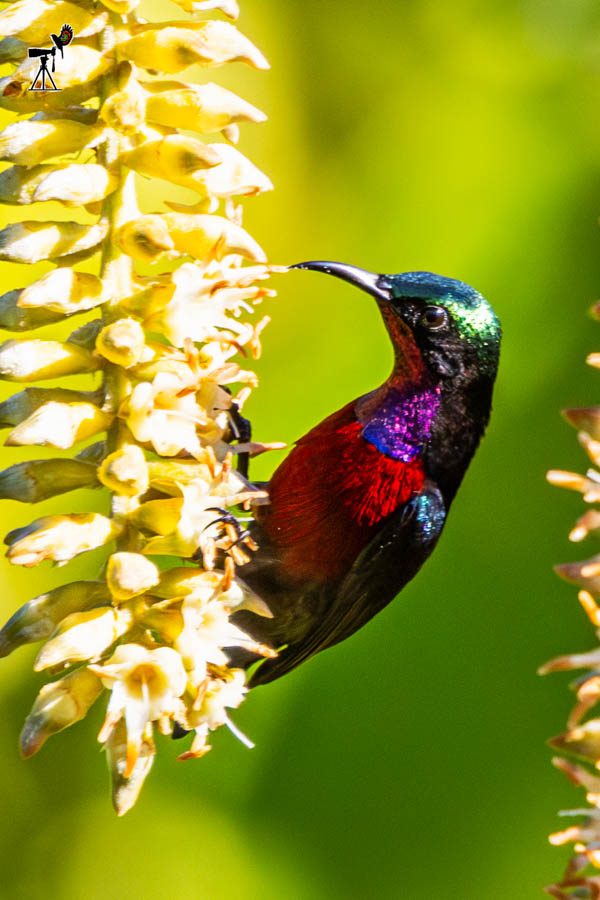
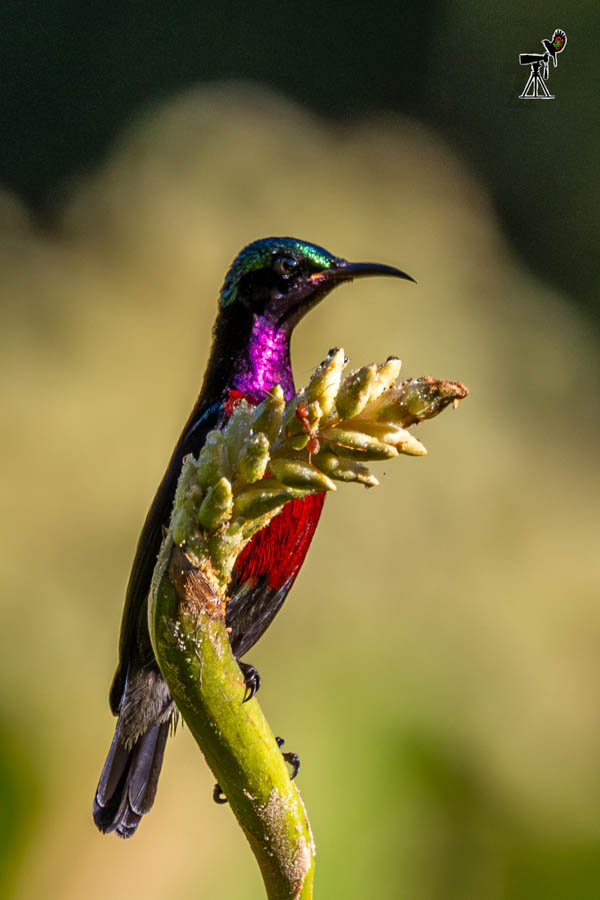
On our way back that morning, the forest suddenly echoed with the loud, resonant calls of the Large Scimitar Babbler. The sound seemed close, almost within reach, and immediately rekindled our hopes. Although I had seen the species earlier, I had missed the opportunity for photographs, so this felt like a second chance.
We paused and waited. The bird continued calling, occasionally responding to the imitations from our guide. A few times, we detected subtle movement between branches, but the dense foliage kept it frustratingly concealed. For nearly half an hour, we stood in anticipation, only to gradually realise that the calls were drifting from much farther away than we had first assumed. With that understanding came acceptance; there would be no sighting this time. We turned back quietly, breakfast now a more certain reward.
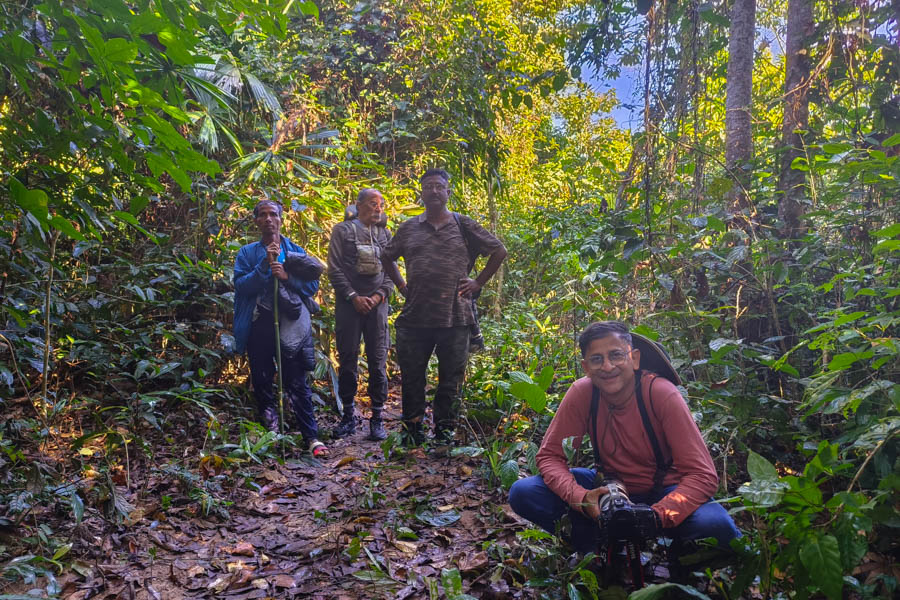
After lunch, we made our way once again to Hide #2—the same location we had visited on the first day. That afternoon, we had narrowly missed the Asian Stubtail, another regional speciality (and a migratory visitor), so expectations were cautiously high.
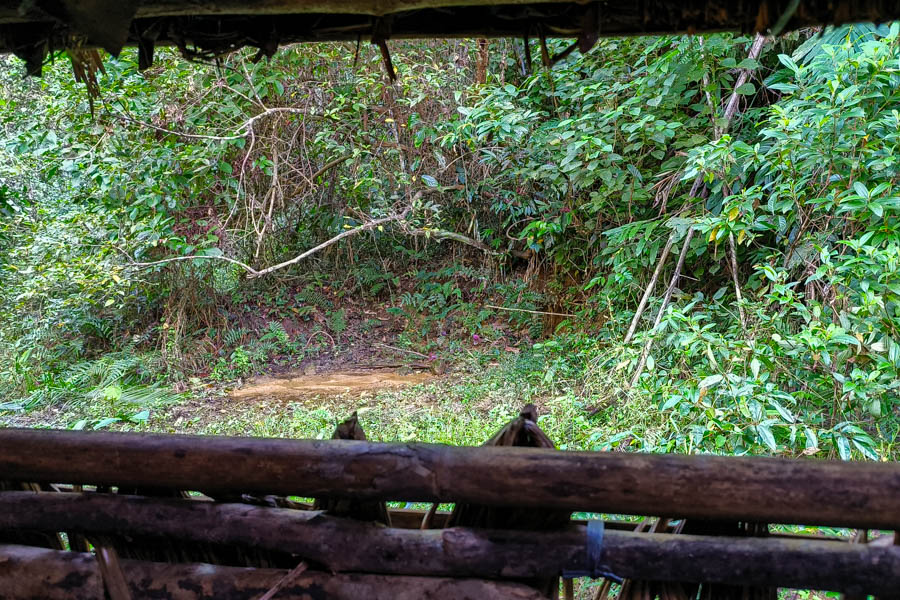
Once settled inside the hide, I took a few photographs to give a sense of our vantage point—the modest interior and the view toward the waterhole outside.
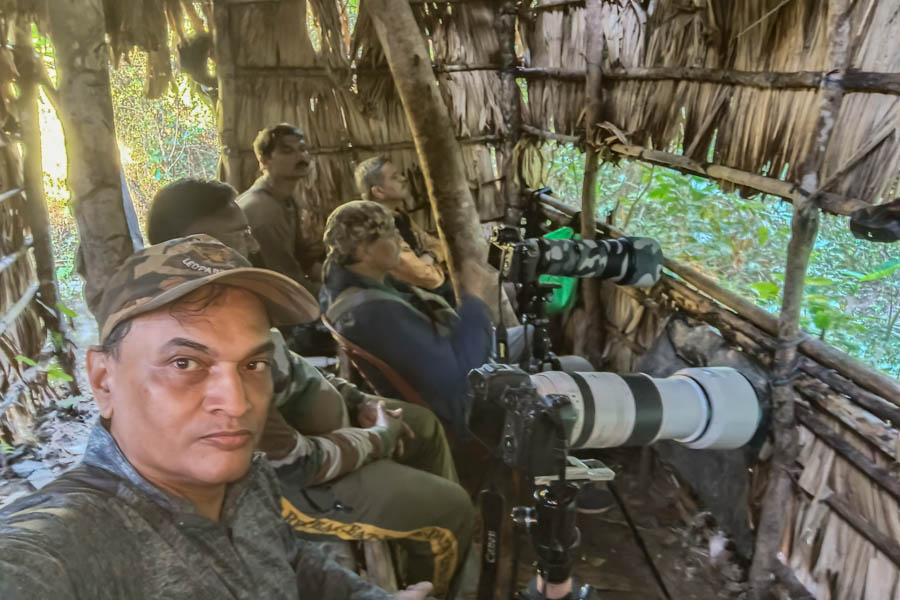
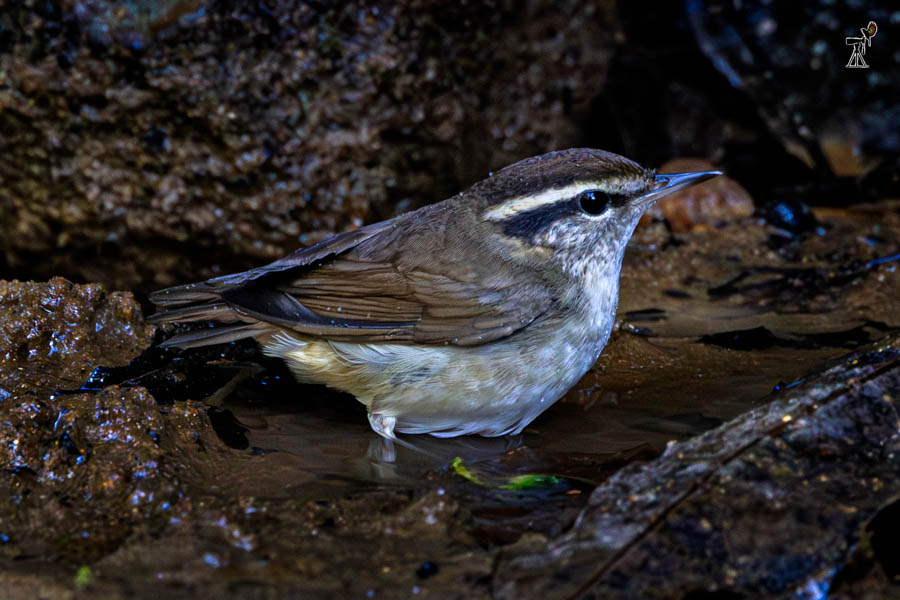
The first arrival of the afternoon was a White-tailed Robin, a welcome sight. But it was not long before the much-anticipated Asian Stubtail appeared. Unlike many brief visitors, it lingered calmly, moving about without apparent urgency and allowing us not only decent photographs but also some satisfying video footage.
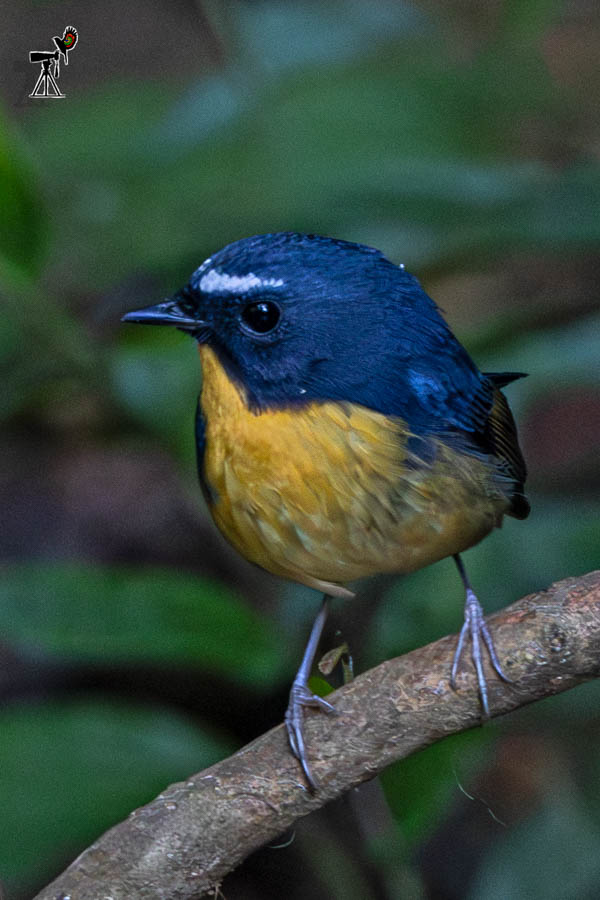
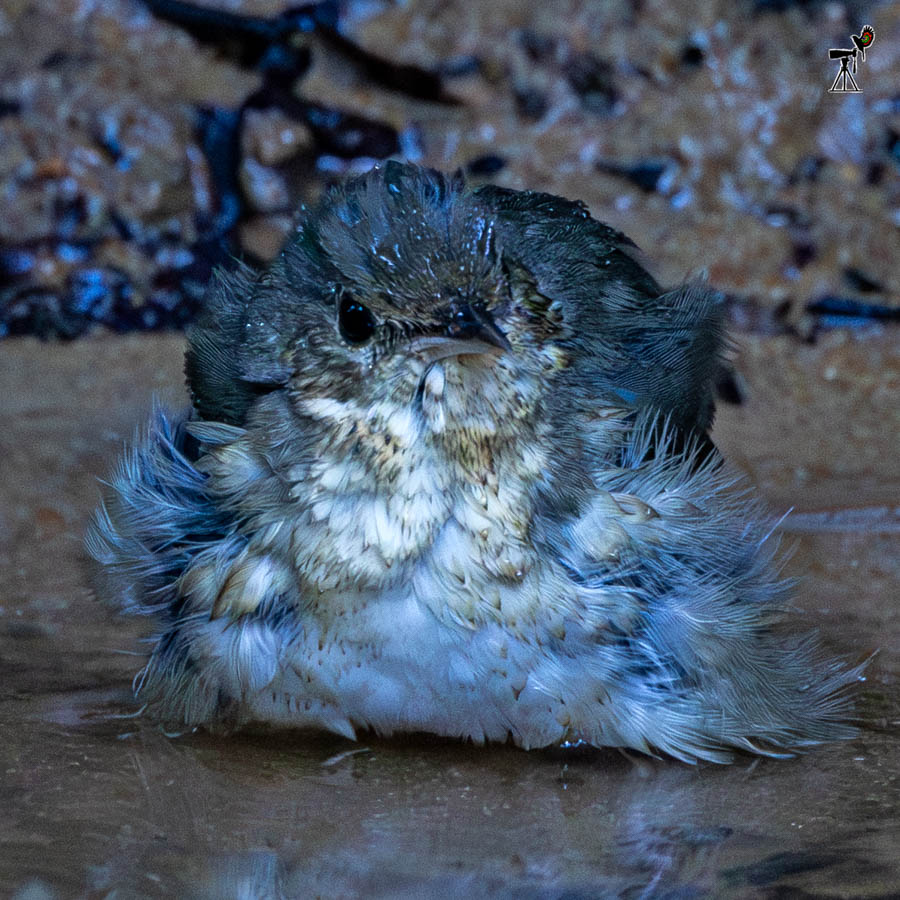
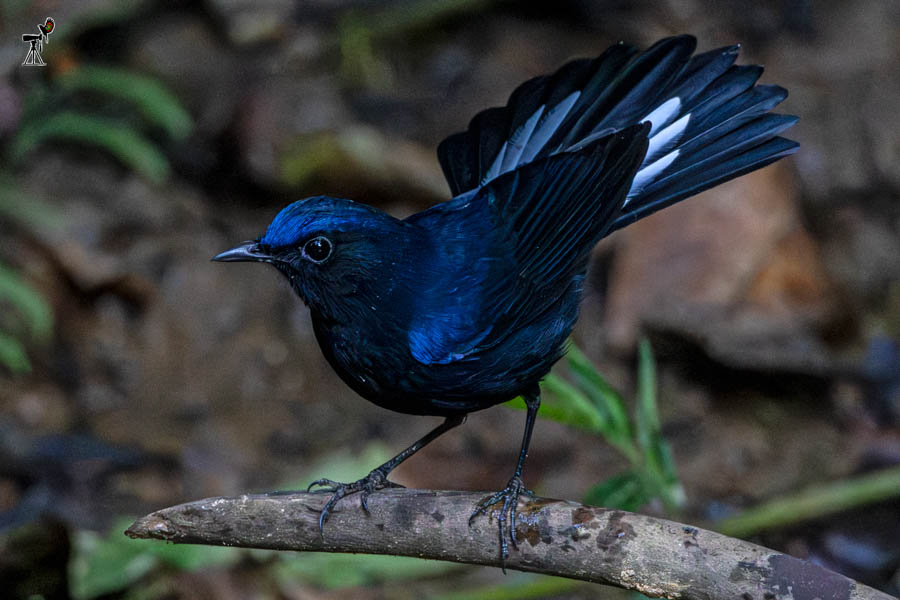
For the first hour, activity remained steady. Later, it slowed, though a few notable species continued to visit. Among them were both male and female Snowy-browed Flycatchers, a Siberian Blue Robin, and the ever-present Grey-headed Canary Flycatcher. As we were preparing to leave, the forest offered one final flourish, a Lesser Shortwing and another White-tailed Robin. The robin obligingly fanned its tail, presenting a graceful parting pose.
By 4:15, the light had begun to fade, and we started our return walk to the homestay. By now, we had grown accustomed to the stream crossing—trousers folded to the knees, a sturdy stick in hand for balance, and a noticeably steadier pace compared to our tentative first day.
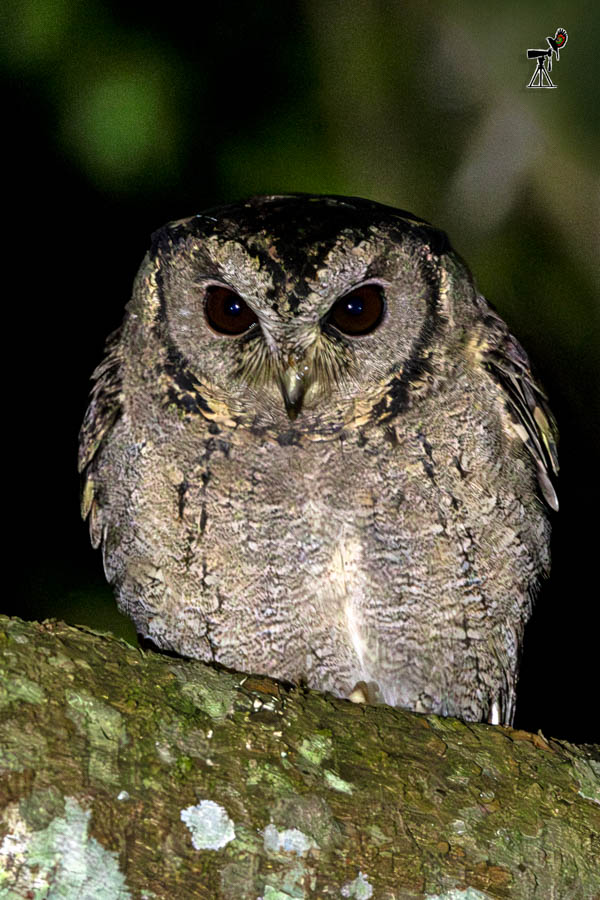
After dinner, we ventured out again for a short owl walk. This time, however, we chose the trail toward the village, targeting the more commonly encountered species rather than the elusive Oriental Bay Owl. The effort paid off quickly. Not far from the homestay, we located a Collared Scops Owl, quietly perched and blending seamlessly into the night.
Day 4: 28-Nov – Bulbul Trail and Hide#1
This morning we were able to start right at 6:00 a.m., with no fog to delay us. On the agenda were two regional specialities—the Black-headed Bulbul and the Ashy-headed Pigeon. The former is often confused with the more widespread Black-crested Bulbul, but despite both having dark heads, they are distinct species, and careful observation is required.
We started towards the hides but took a detour into the Dosdewa village. The fields were already active with early farming activity, and locals were well into their work before we had properly begun our trail. The rural landscape, gently lit by the morning sun, made for a pleasant beginning.
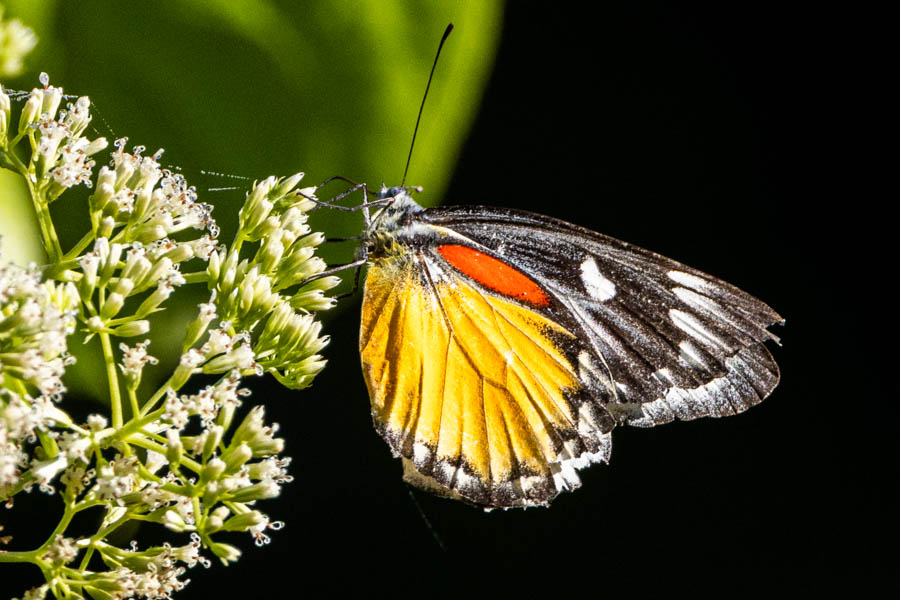
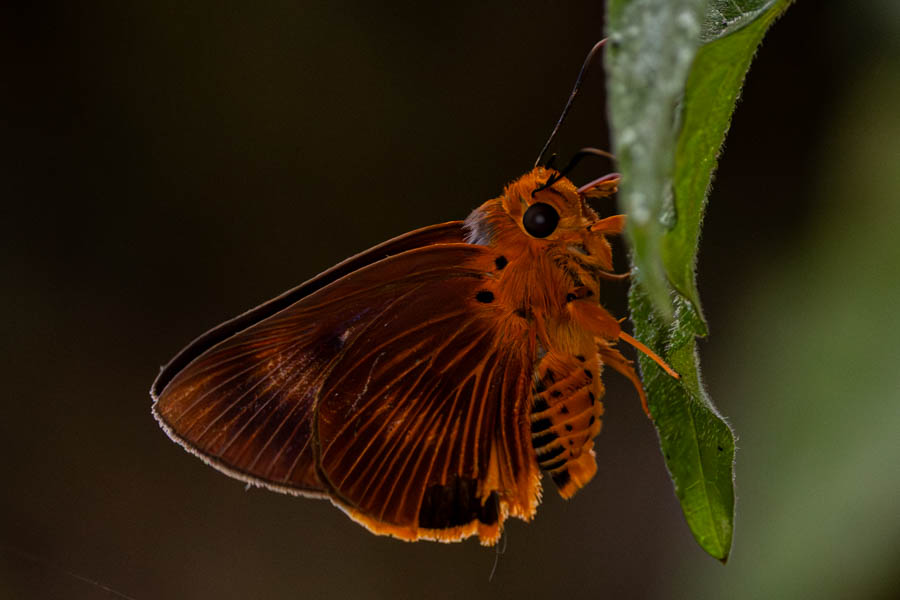
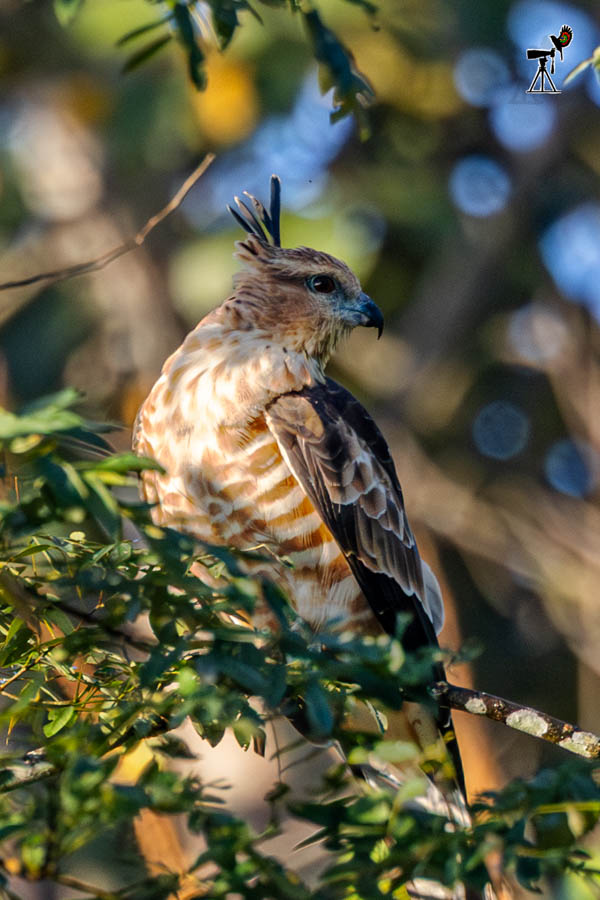
A distant raptor soon caught our attention. It turned out to be a Shikra, common across much of India, but always worth a look. Near a small lake ahead, we noticed more raptor movement across the water, possibly Black Bazas, though they remained frustratingly distant. As we scanned the treetops, Avinash suddenly located a Jerdon’s Baza much closer to us, offering a far better view. The area was also alive with butterflies, and although they were not our focus, it was impossible to resist taking a few photographs.
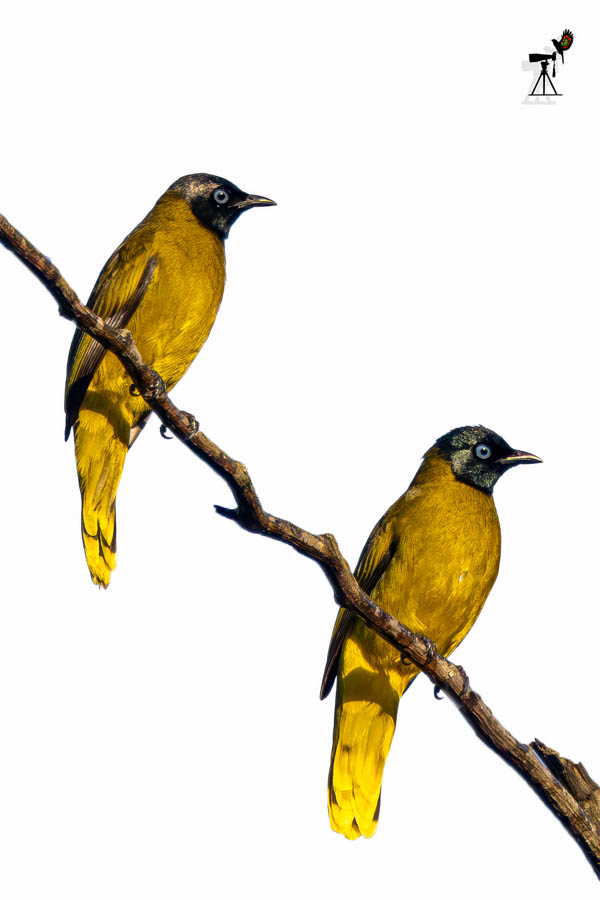
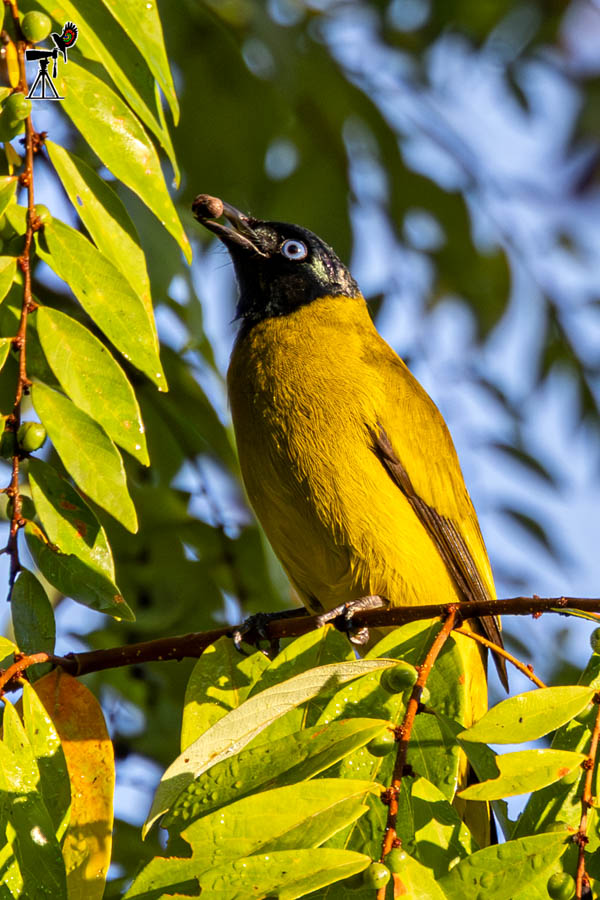
A few waterbirds dotted the lake, and as we continued along the trail, someone spotted a small flock of yellowish birds in the distance. Through his binoculars, Avinash confirmed what we had been hoping for—the Black-headed Bulbuls had arrived. Instinctively, we quickened our pace, but Avinash cautioned restraint. Any sudden movement or noise could send them away. Containing our excitement, we waited patiently as the birds settled into flowering trees. The strategy paid off, and we managed some satisfying photographs.
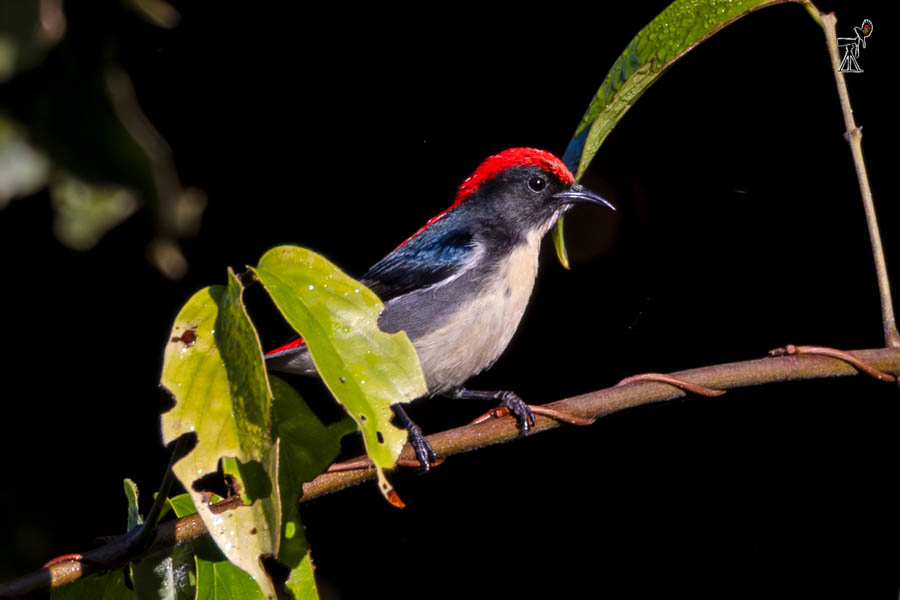
The morning was far from over. The trail continued to reward us with fresh sightings. A vibrant male Scarlet-backed Flowerpecker kept us entertained as it flitted restlessly from branch to branch before finally disappearing into the canopy.
Then, almost as if on cue, a Van Hasselt’s Sunbird made an appearance—ironic, given that we had dedicated an entire trail to it the previous day. Yet the true highlight of the morning was the Ruby-cheeked Sunbird. Initially perched on a distant tree, it gradually moved closer, eventually settling on an exposed branch just across the road. The light was excellent, and for a few precious minutes, the bird held its position, allowing us some excellent images.
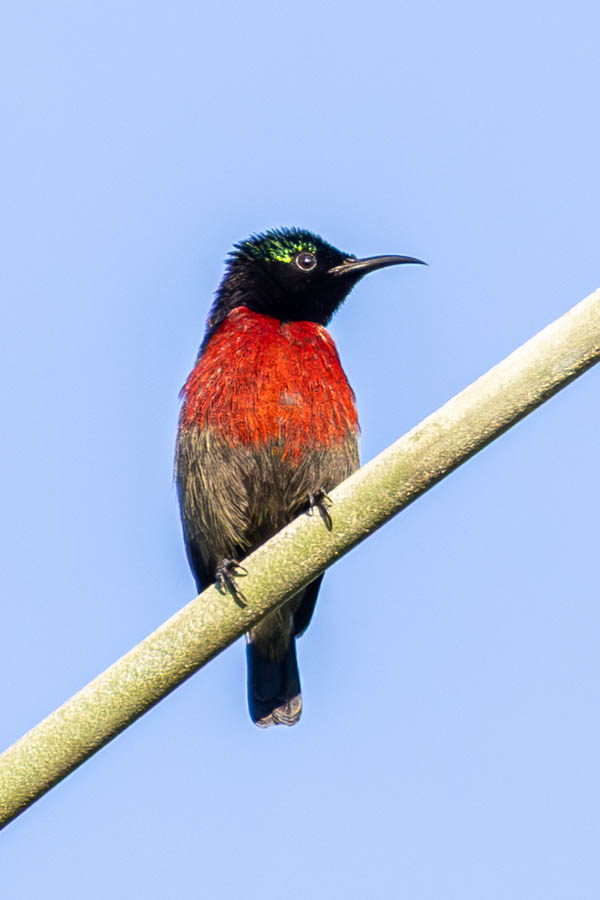
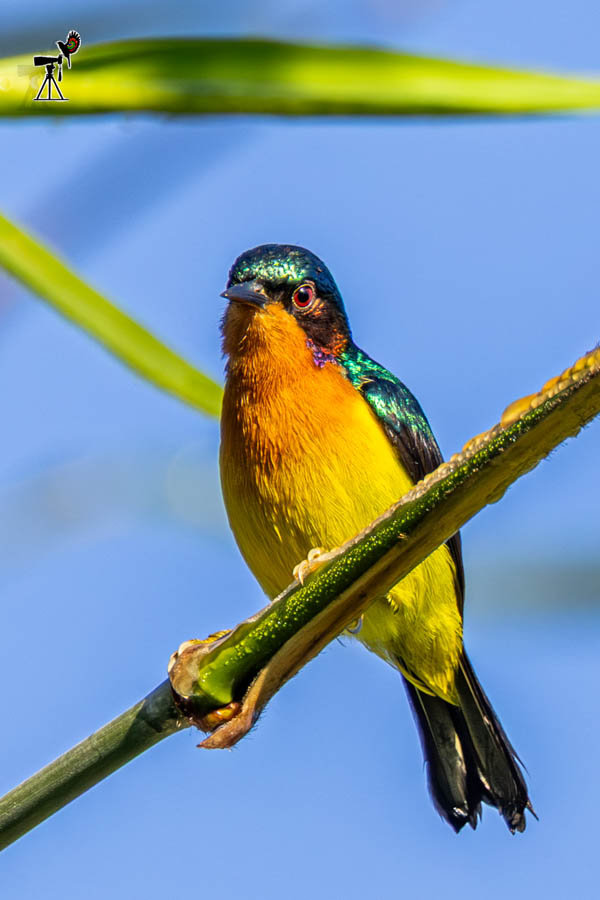
Though we had already tallied a rewarding list of species, time was still on our side. We decided to revisit the Myna Trail, which led to another encounter with the ever-elusive Large Scimitar Babbler. Once again, it called repeatedly from close range yet refused to reveal itself fully. The pattern was becoming familiar, presence announced loudly, visibility denied stubbornly. The only consolation came from a cooperative Spiderhunter that posed obligingly for a few frames.
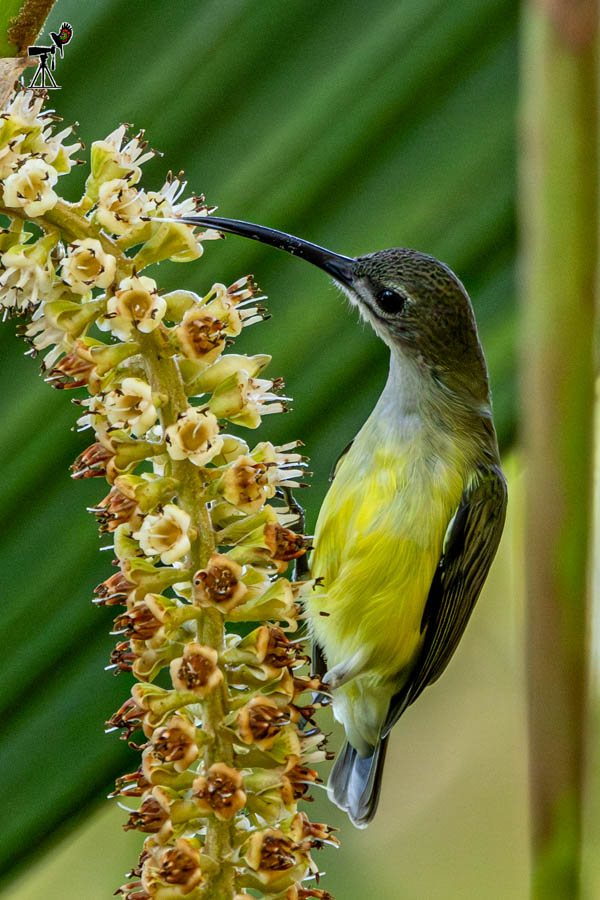
After lunch, and a short, welcome rest, we headed back to Hide #1 for our second session there. The afternoon began on a familiar note, with a few Cachar Bulbuls making early appearances. Though the two hides were separated by only a short distance and seemed to share similar forest habitat, certain species appeared to have distinct preferences. Some birds were regular at one hide and rarely seen at the other, as if bound by their own unwritten territorial rules.
Before the bulbuls settled in, however, we were greeted by a newcomer to this hide—the Pale-blue Flycatcher. This species had not appeared during our earlier sessions, making it a pleasant addition. Over the next couple of hours, both male and female individuals visited the waterhole, offering steady photographic opportunities.
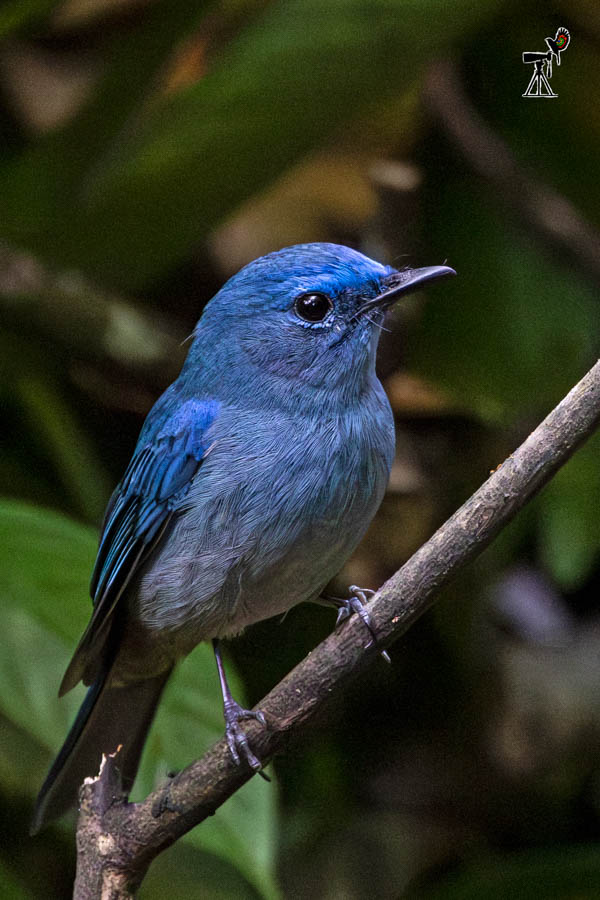
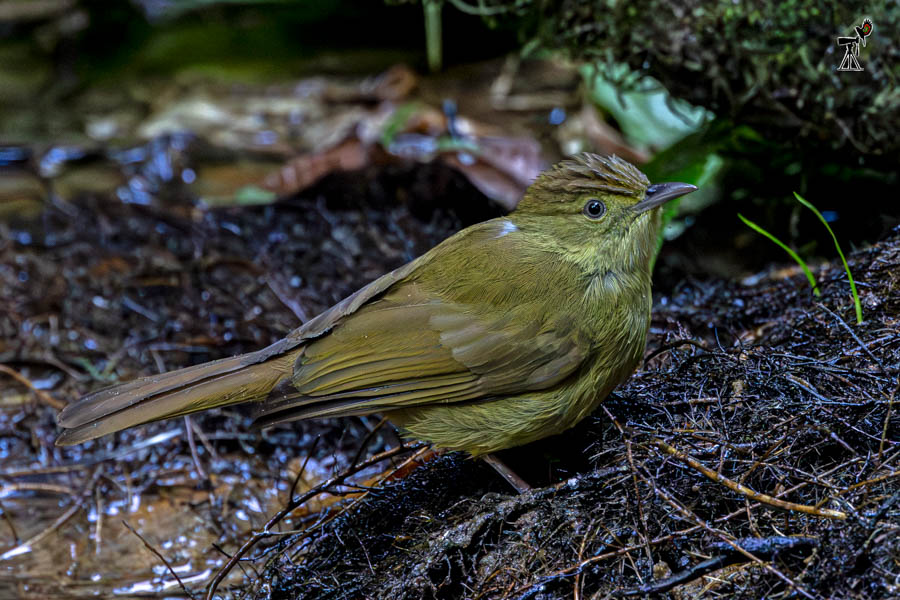
Earlier, I had remarked that some birds seemed loyal to specific hides. Yet nature is always ready with exceptions. To our surprise, a Grey-bellied Tesia, previously regular only at Hide #2, made a brief appearance here. As if to add to the afternoon’s diversity, two Black-crested Bulbuls arrived soon after, followed by a Blue-throated Blue Flycatcher, both first-time sightings for us on this trip.
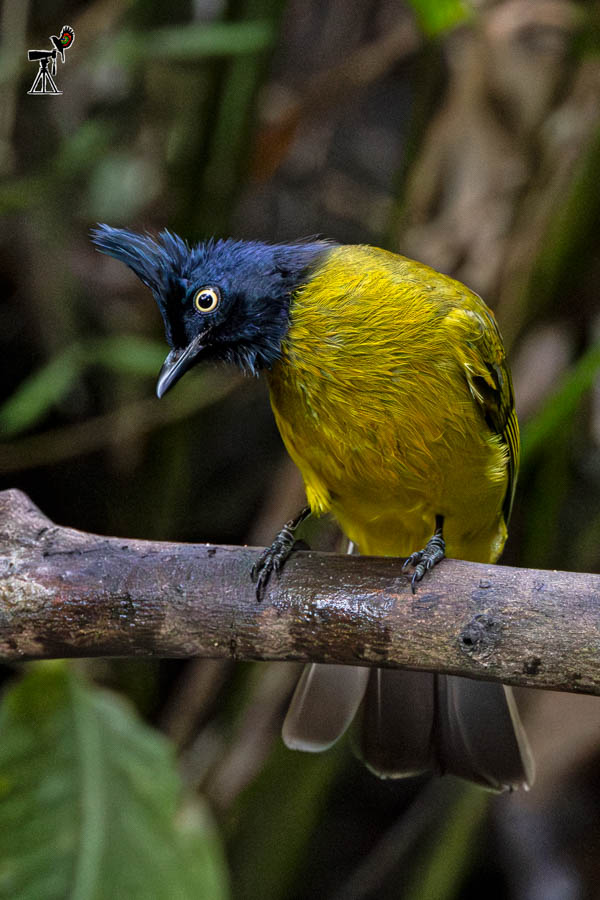
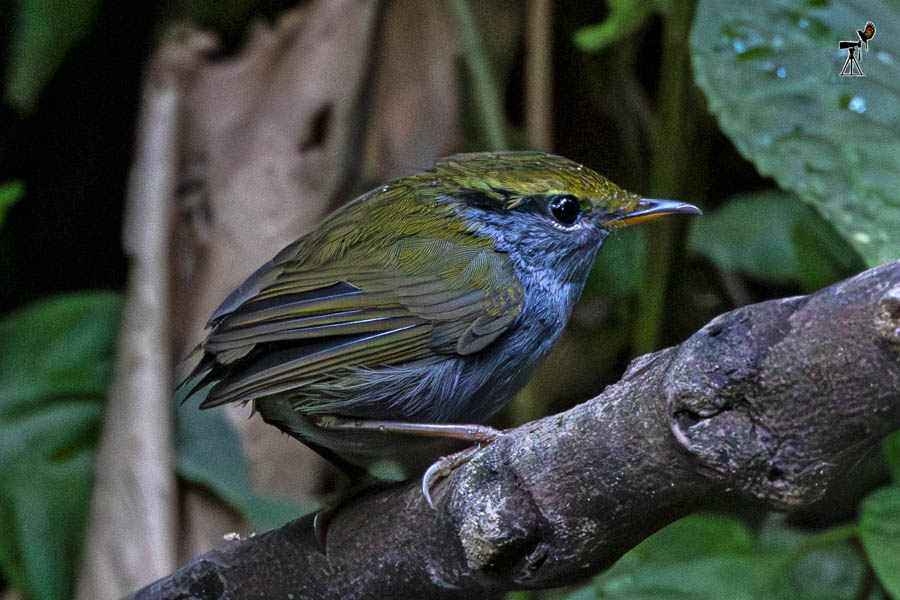
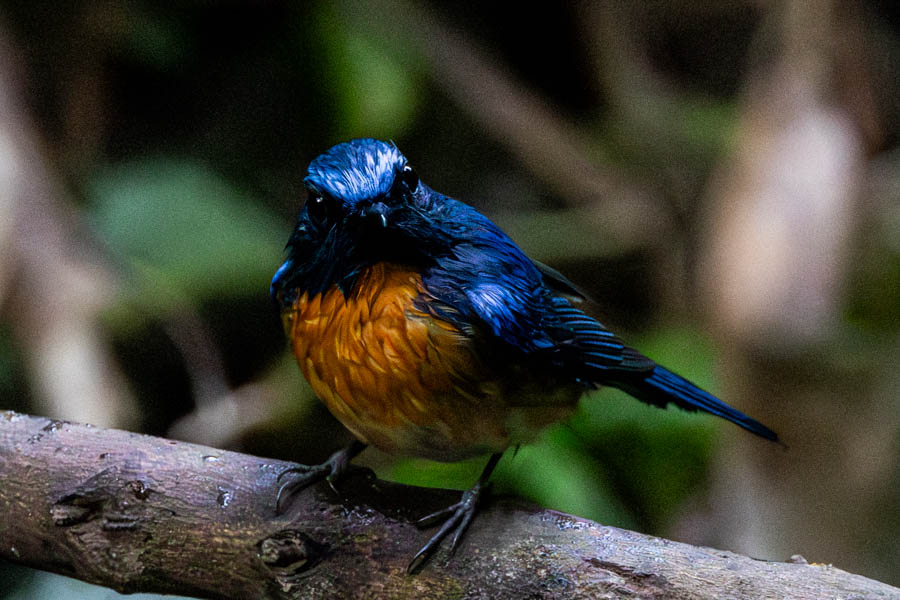
Although these species are mentioned here in quick succession, the reality of hide photography is far less brisk. Long stretches of stillness test one’s patience. At times, the absence of activity becomes palpable, and quiet whispers among us gradually grow louder—until someone gently reminds the group that silence is essential in the forest. Then, almost theatrically, a bird materialises out of nowhere, erasing all frustration in an instant. This rhythm of anticipation and reward defines every hide session.
As usual, we concluded the afternoon around 4:30 and made our way back. Over tea and biscuits at the homestay, Avinash briefed us on the next morning’s plans. Conversation drifted easily—from the highlights of the past few days to the species still on our wish list. The checklist mentality, though secondary, quietly fuels every birder’s enthusiasm.
Re-energised, we set out again for an evening owling session on the hill. Darkness descends early here—by 5:30 p.m.—so we began around 7:00 and methodically covered the slopes, moving up and down in careful loops. Once again, the Oriental Bay Owl remained elusive. In fact, the forest was unusually silent—no owl calls at all, not even from the more commonly encountered scops owls. Perhaps they had shifted territories, or perhaps the conditions simply weren’t right. After more than an hour of searching, we returned without success, the night offering only quiet and unanswered anticipation.
Day 5: 29-Nov – Hathikheera Tea Estate & Hide#1
Until now, all our morning sessions had been on foot through forest trails. Today was different. We drove nearly 40 minutes from our homestay to the Hathikheera Tea Estate. Avinash has been visiting this area regularly over the past few years and had identified a handful of potential lifers here. Since we had already covered many of our core forest targets in the preceding days, this seemed like the right time to explore a different habitat.
True to form, the morning began with a blanket of fog. Visibility was near zero, and we had little option but to wait it out. After about half an hour, the mist gradually thinned, revealing the rolling tea bushes and scattered trees around us.
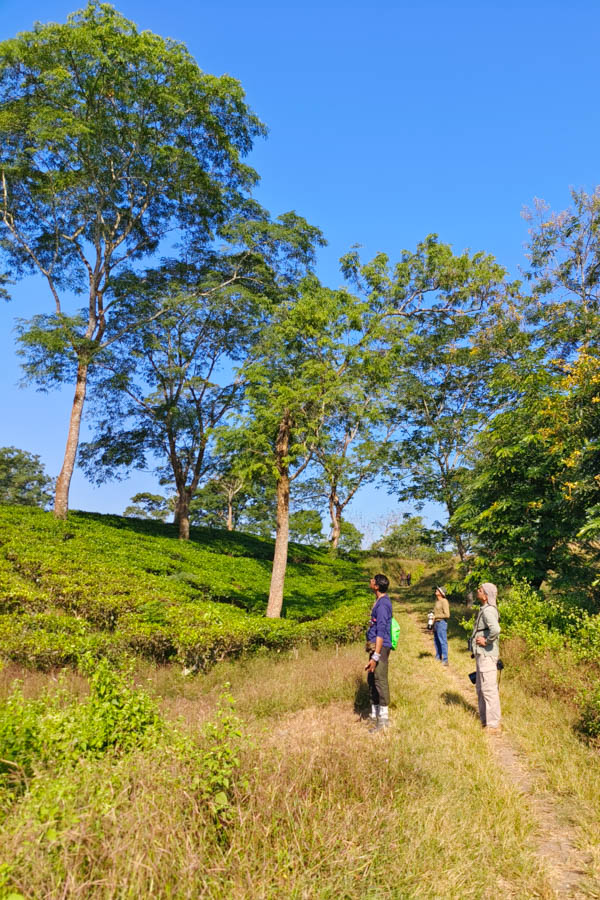
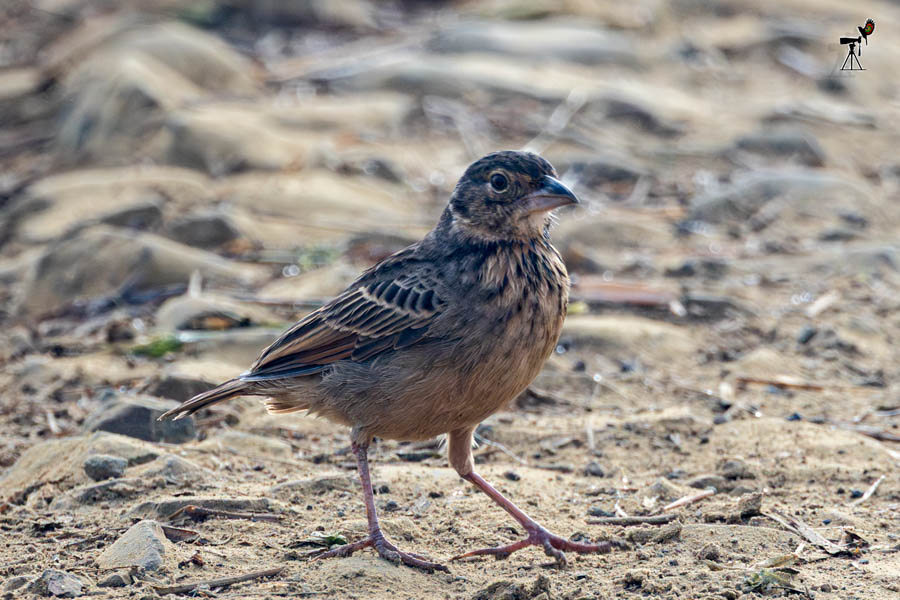
Almost immediately, we spotted three species in quick succession, the Bengal Bushlark (a lifer for me), along with a Ruddy-breasted Crake and a Striated Grassbird. Naturally, the Bushlark became my priority. I followed it patiently as it foraged on the ground between the tea rows, managing a few satisfying photographs before it melted back into cover.
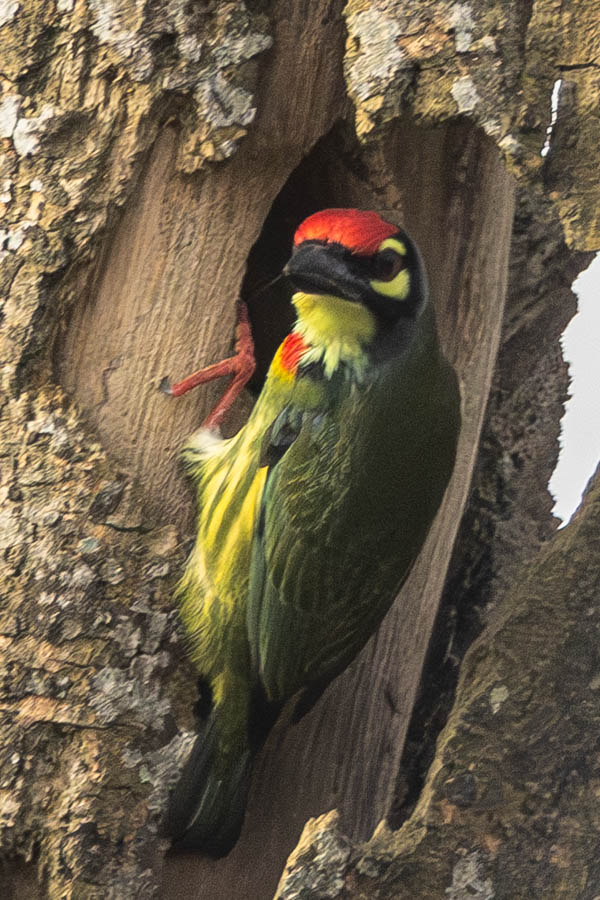
As we moved ahead, a familiar metallic “tuk-tuk-tuk” call drew our attention. It was the Coppersmith Barbet, a species common even in urban areas like Mumbai. Though not a rarity, it remains an engaging subject, especially against the softer backdrop of a tea estate.
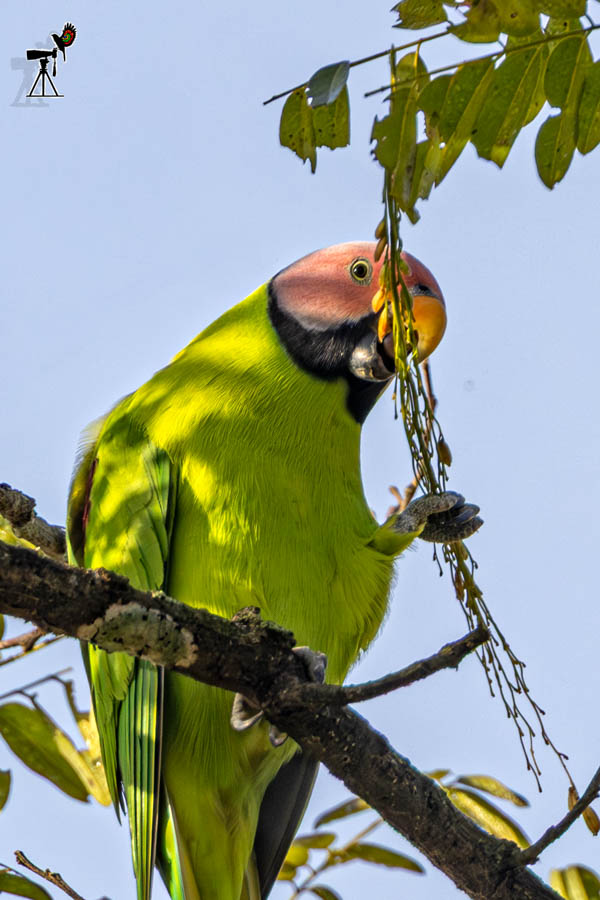
By then, the fog had lifted almost completely, offering clear views across the estate. One of our primary targets here was the Blossom-headed Parakeet. It bears resemblance to the more widespread Plum-headed Parakeet, though the latter is not found in this region. Today, Rejoice, the driving force behind birding culture in this area, had joined us and took the lead in locating the parakeets.
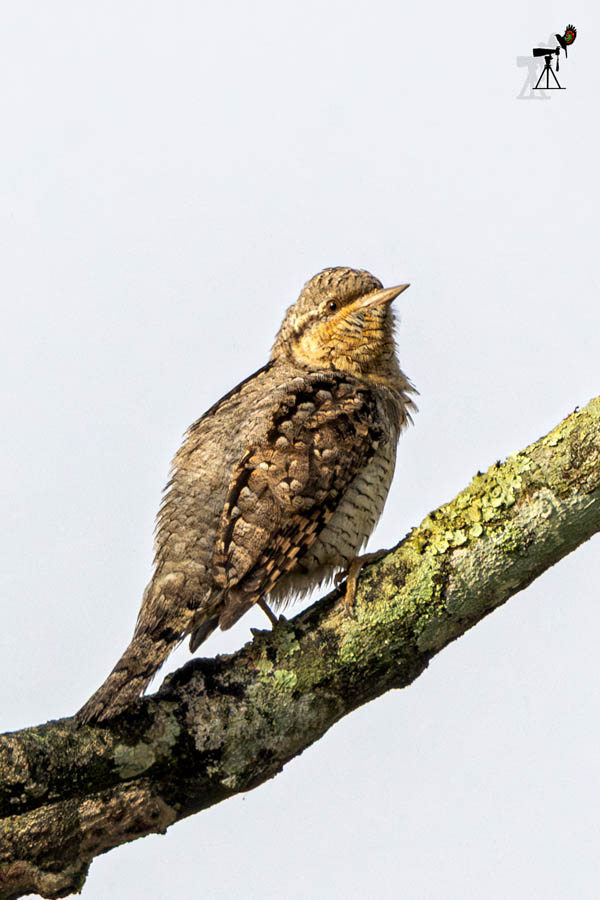
Soon, we heard his excited calls from a nearby hillock. He had spotted a small flock. As we carefully made our way through the tea bushes, one of the parakeets obligingly perched within good range. While approaching the tree, we were momentarily distracted by another unexpected sight, a Eurasian Wryneck perched on a bare branch. Cameras swung quickly in its direction, and we secured a few frames before turning back to the parakeet, which was still busy feeding on seeds.
The Thick-billed Warbler was another morning target. We began scanning the appropriate scrubby patches, and at one point, our hopes soared when the bird flushed low through the bushes. We hurried closer for a better look, but the warbler had other plans. It vanished into dense vegetation and was not seen again. Just a fleeting glimpse, nothing more.
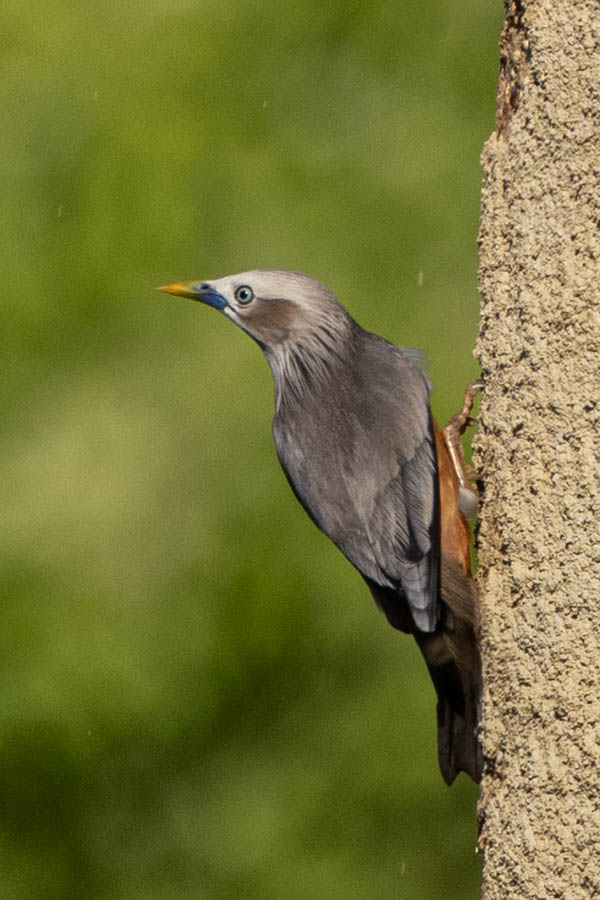
Though the warbler eluded us, the overall bird activity was impressive. Fruiting trees attracted Chestnut-tailed Starlings, Mynas, Shrikes, and bulbuls. One shrike briefly raised hopes of being a Burmese Shrike, but closer inspection ruled that out. The fruiting trees were active, Plaintive Cuckoos (pair of them) calling from mid-canopy, (Ashy and Black ) drongos hawking insects overhead, and woodswallows gliding between perches. The Fulvous-breasted Woodpecker and Blossom-headed Parakeet were also seen.
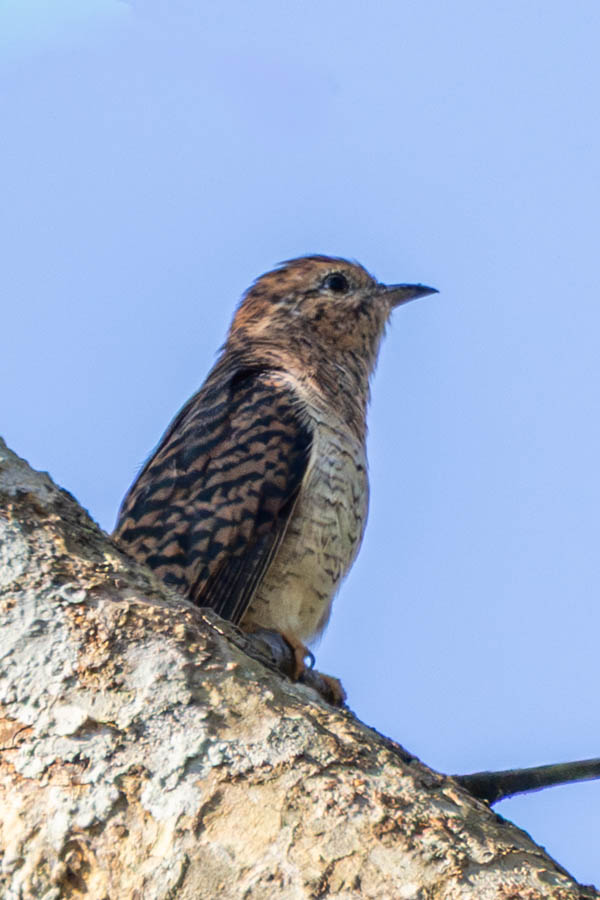
Amidst this activity, Avinash was particularly keen on locating the Lesser Coucal, the smaller cousin of the more familiar Greater Coucal (known as भारद्वाज in Marathi). He had seen two individuals here the previous week and was confident they might still be around. His assessment proved accurate. Before long, both birds appeared, allowing us decent views and photographs.
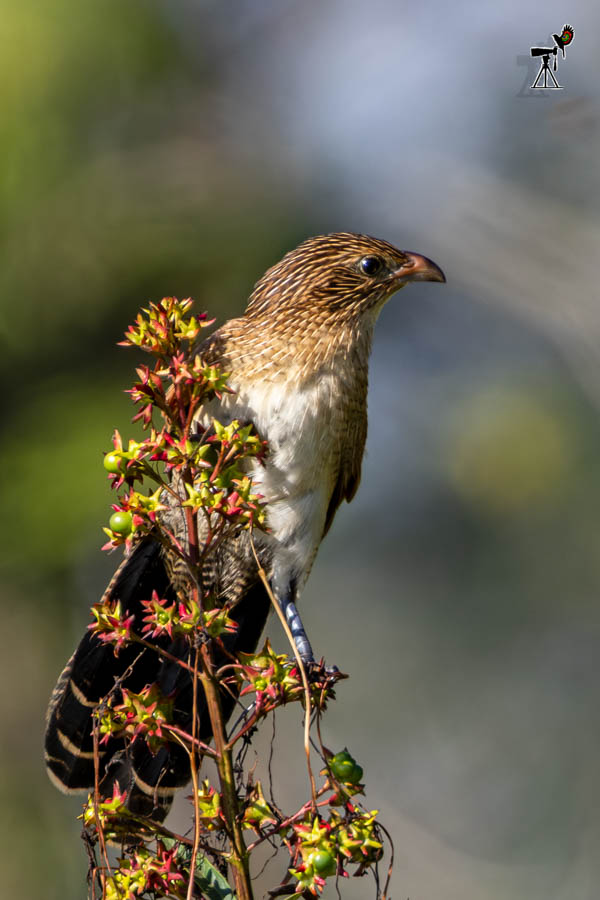
By around 9:30, we had covered most of our intended species, except for the elusive warbler. With the sun now bright and bird activity slowing, we wrapped up the session. For a change, we had breakfast at a local eatery instead of returning to the homestay. By 11:00, we were back, ready for some much-needed rest before lunch.
In the afternoon, we were given a choice between hides, as the other birding group planned to explore Hide #3, located further downstream. Nitin ji decided to try his luck there, leaving just four of us, along with Avinash, at Hide #1. By now, we had recorded most of the regular hide species, but this was our final opportunity to spot the Black-throated Thrush, a bird that had been seen only once the previous week.
Soon after settling in, two Puff-throated Babblers made an entrance. They spent a relaxed few minutes bathing and then moved into the shade to preen. After their departure, however, the waterhole fell unusually silent. Not a single bird appeared, not even the reliably frequent Grey-headed Canary Flycatcher. The lull stretched on so long that we eventually stepped outside the hide to stretch our legs.
It was then that we discovered the reason for the eerie stillness. Perched right above the hide was an Asian Barred Owlet, calmly surveying the waterhole below. Its presence was enough to deter the smaller birds from venturing in.
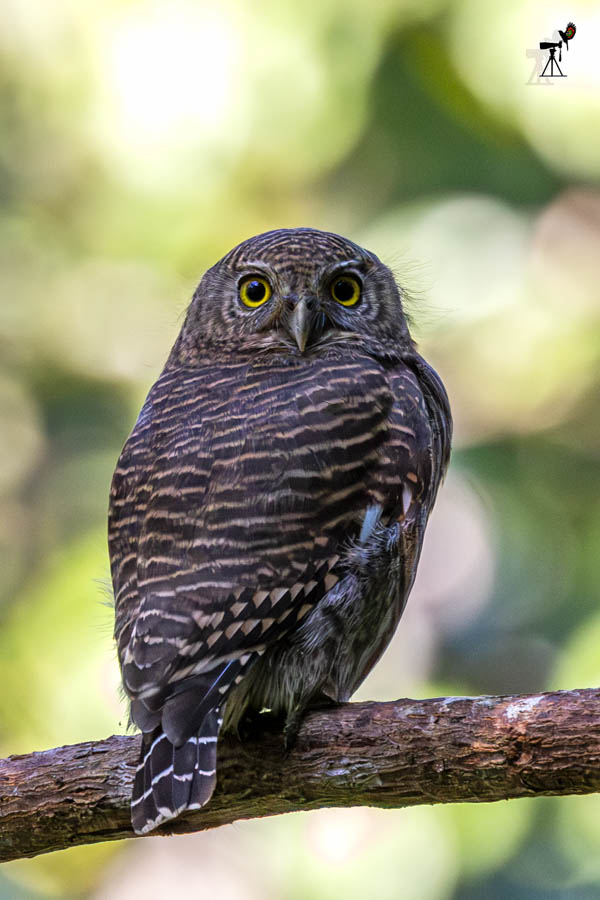
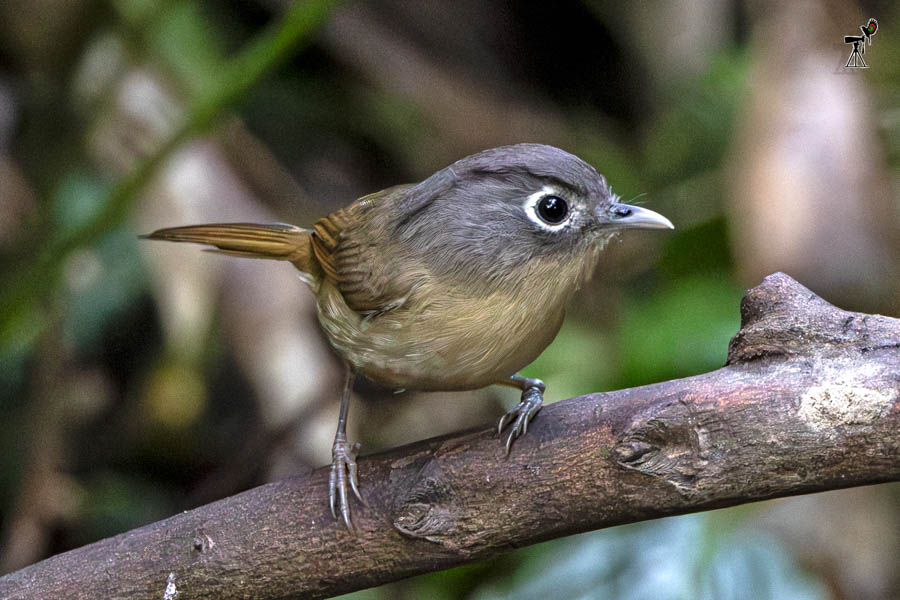
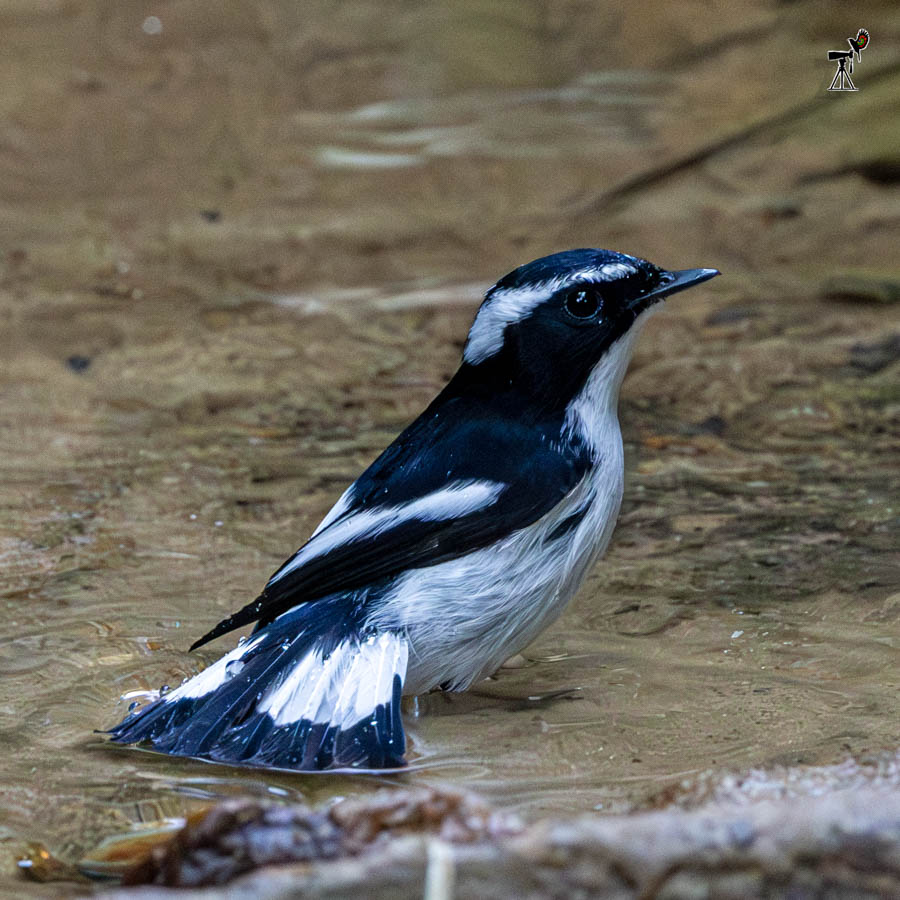
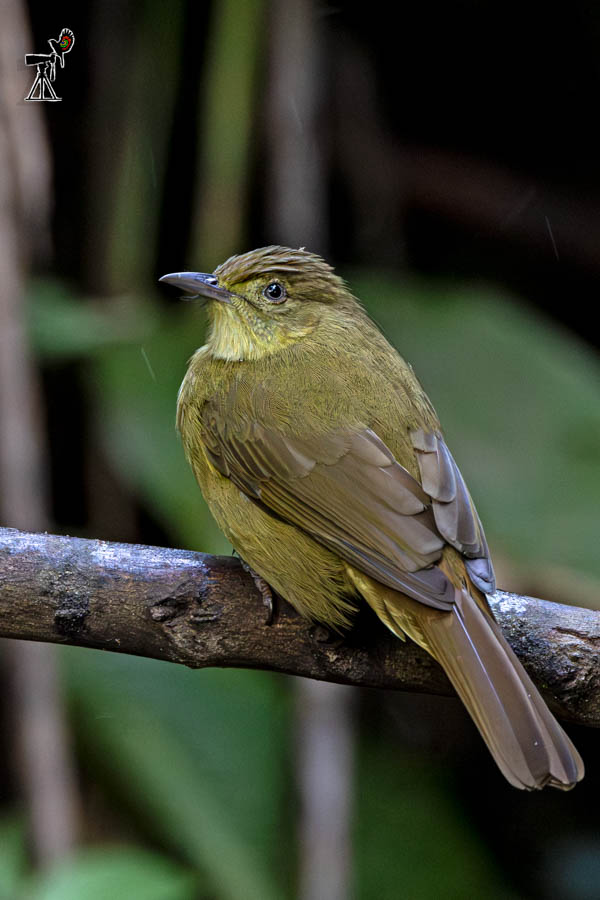
Fortunately, the owlet flew off after some time, and about 15–20 minutes later, activity cautiously resumed. As if reclaiming its territory, the Grey-headed Canary Flycatcher was once again the first to return. Gradually, other species followed. Among the new arrivals for this hide were the Nepal Fulvetta and the Little Pied Flycatcher. The ever-faithful Cachar Bulbuls made their expected appearance, along with Pale-chinned Flycatchers. As daylight faded, the Lesser Shortwing arrived, true to form, preferring the dimmer hours and almost always appearing near the end of a session.
By 5:00 p.m., we were back at the homestay for tea, snacks, and the customary post-session discussions. It was our final evening here. Three members of our group had an early departure the next morning—their flight was at noon, which meant a 6:00 a.m. start considering travel time. For Captain Saab (Group Captain Ved Upadhyay, my roommate and an Air Force veteran) and me, our flight was scheduled after 3:00 p.m., allowing us the possibility of one last short morning session. I was still hopeful of adding the Ashy-headed Pigeon to the list before we left.
Day 6: 30-Nov – Return Journey
We had packed our bags the previous night and were ready to step out by 6:00 a.m. for one final, short session. With time only until 8:00, we chose the village trail once again, primarily in search of the Ashy-headed Pigeon, my lingering target, and of course, any other species willing to make a farewell appearance.
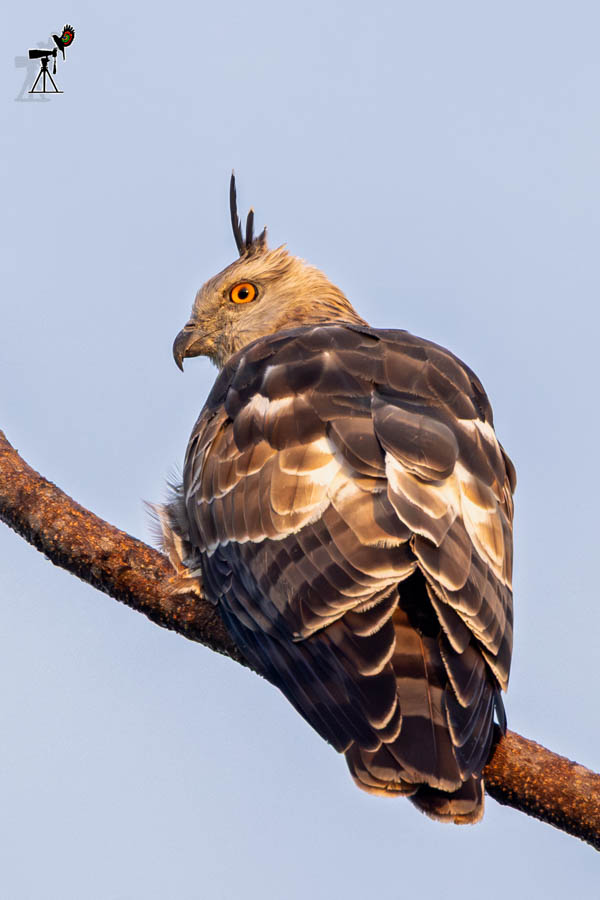
The morning, however, was unusually quiet. Apart from a lone Jerdon’s Baza circling above, there was little of note. The pigeon remained elusive, despite our guide’s assurance that it was both common and regularly seen in the area. Some birds, it seems, prefer to maintain a sense of mystery.
By 8:00, we returned to the homestay, had breakfast, and set off for the airport before 9:00. Being a Sunday, traffic was minimal, and with just a brief tea halt, we reached Silchar airport well before noon. Our flight was scheduled for 3:30 p.m., but entry into the terminal was not permitted so early. Silchar is a small airport with only a handful of daily departures, and staffing is understandably limited.
We considered finding lunch outside, only to discover that options were scarce both outside and inside the airport premises. Around 12:30 p.m., we were finally allowed entry. The next delay awaited at baggage screening; there was no operator for the X-ray machine until 1:30. Even after clearing that hurdle, security processing stalled due to the absence of staff at the gate. Another half-hour passed before we could proceed toward departure.
Our flight from Silchar was to Guwahati, with a connecting onward journey to Mumbai. Guwahati airport, in stark contrast, was in complete disarray. The scene resembled the crowded platforms of CST railway station in Mumbai, dense with passengers and restless queues. The chaos stemmed from widespread delays attributed to Indigo, with several flights cancelled altogether. My own onward flight was delayed by a couple of hours. Initially frustrating, the delay seemed minor in the larger context. Considering the number of cancellations, I was simply relieved that our flight eventually departed.
Once airborne from Guwahati, the remainder of the journey unfolded smoothly.
Summary
“What Worked, What Didn’t”
- November gamble: It was definitely worthwhile
- Owl miss: In any trip, you cannot get the full target list and missing one or two adds the surprise elements. Also gives a chance to visit the same place again
- Tea estate surprise: Initially not in the plan, but this turned out to be super duper trail
Overall, it was a rewarding trip. While a few hoped-for lifers slipped away, the experience more than made up for it. I had begun the tour at 994 species. By its conclusion, the tally stood at 1006, crossing the four-figure milestone. The number is satisfying, but it is the forests of Dosdewa, and the quiet hours inside those hides, that linger longer in memory.
Leave a Comment
Comments
It is nice travelogue, barely missed any of his worthy experience.
Fantastic write up. Having gone through your blog, memories of my trip to Dosdewa this February flashed instantly... Certainly one of the best place to find rare birds with good photos and video oppertunity. We could not see Oriental bay owl too in our 3 night birding... Instead we got mountain scops owl on day 2. I would love to go back to the place sometime in December next year
Fantastic write up sir….keep writing.
Wow Agashe Sir, What a wonderful experience. Very nicely written. The blog gives a virtual tour and a good sense of what birding is to an amateur like me. This is indeed a thrilling experience and a very rewarding one. What an array of birds you could see! Marvellous. Keep Clicking and keep writing Sir.
Fantastic blog.
I can see feathery beauty with your eyes.
Shukr.
Nicely written. I relived the same while reading it.
Very well scripted with excellent photos. My memories of Dosdewa Birding Trip with you revived.
Thanks for sharing 🙏🙏.
Good Morning Uday Sir! 🙏🏻
Your Dosdewa-birding blog is fantastic! I felt like I was right there with you under the green canopy, exploring the forests and spotting those amazing birds.
As always, your writing is engaging, informative, and beautifully descriptive - you've got a real gift for sharing your passion! And huge congratulations on hitting the 1000+ species mark - that's truly an incredible achievement!
Eagerly looking forward to your next post & series of amazing images. 👍🏻🙂
The amount of efforts you take just to get a glimpse of a bird are mammoth. By reading your routine , just makes me feel how lucky we are to be your friends that we get to see the beautiful pictures painstakingly clicked in the comforts of our home. Hats off to your passion and dedication.
Congrats on crossing the 1000 mark 👏
Yes Assam has lot to offer not just briding,also river rafting etc .
Nice write upon your trip . If you also add the guide name and contact details it will also help other interested birders to explore
Thanks for sharing
सर्व फोटो खूप छान आले आहेत.
पक्षांच्या सुंदर फोटो सारखेच प्रवास वर्णन सुद्धा खूप छान आहे.
वर्णन वाचून तुझ्या बरोबर प्रवास केल्या सारखे वाटले.
छान, खूप तप आहे असे फोटो काढण्यासाठी
Brilliantly written Uday. Amazing photos. I am thrilled
(N) Wow. Superbly written. In good details. One is now better aware of this fabulous place and possibilities.
Avinash is the best for sightings. One returns with many memories.
Beautifully written....giving me a sense of what I would be experiencing since I am going there in March this year.
Liked the " What worked, what didn't" part... reality check for every birder 👏👍
(NZ) Superb write up, could also relate to it since I went on the last trip of 2025 with Avinash
Well articulated sir
While going through the article had a virtual trail there
Keep up the good work 👍
(IG) Congratulations on 1000+ lifers in India. Read the blog. It is lovely.
An absolute brilliant write up, loved it and the pics! Congratulations on crossing 1000 species! That’s a momentous accomplishment!!
Wow nice
Crossed 1000
Congratulations 💐
Experienced everything all over again.. Excellent write up and super images as always..
Very very well documented … very engaging .. learned a lot . Really good @uday agashe
शमाचे गाणे ऐकायला/ रेकाॅर्ड करायला मिळाले का?. फुलपाखरू, सनबर्ड छान आहेत.
Your write ups are very informative and you present it well. Big fan of your pics.
Fantastic write up as always !!!
(AA) Awesome blog Uday. Awesome pics also. As always 👌
(FD) Lovely write up as always with visual treats along the way
Super trip 👌. Thanks for letting us know about new place.
This is very well.written blog. Good documentation and images..
Nicely written. Had been to Dosdewa last year. Reading the write-up brought back memories. You have penned the bird sighting very aptly with the photos. Keep blogging.....👌👌👌👌
Nice write-up