The Beach Thick-knee Story
- March 2026
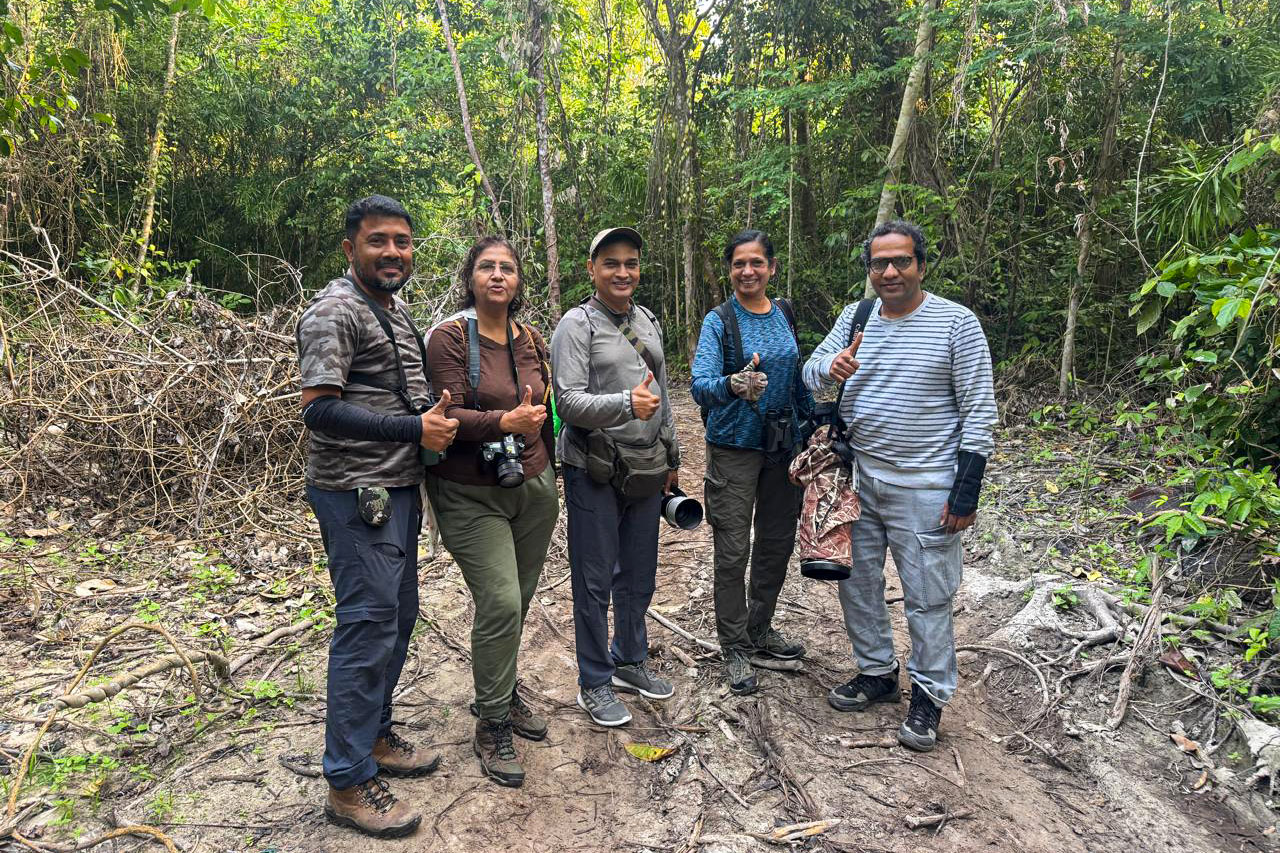
Andaman is always a rewarding destination if you’re looking to add lifers in bulk. Having visited the islands earlier in February ’22, I was initially unsure about joining this trip when Santosh brought it up. Two factors eventually tipped the scales:
- This itinerary included Little Andaman, with key targets like the Nicobar Pigeon and the Beach Thick-knee
- On my previous trip, I had missed several Andaman endemics, and for a few others, we had sightings but no usable photographs
The trip was planned from 1st to 9th March, and this time we were to be accompanied by one of the region’s top guides, Vikram Shil. Strangely, even by the end of January, we hadn’t booked our flights, something we usually do well in advance.
This time, I was keen on a direct flight. Stopovers typically mean repeated security checks, unpacking camera gear, repacking carefully, and always the risk of leaving something behind. There was a convenient morning flight that would get us back to Mumbai before peak traffic, though it meant missing the final morning birding session. a trade-off I was willing to accept. After some discussion, we locked in that option.
Mumbai to Shri Vijay Puram (Port Blair)
By the morning of 1st March, we were ready to go. Terminal 1 was unusually crowded at check-in, but since we had reached well in advance (as always), it wasn’t an issue.
On arrival at Shri Vijaya Puram, we learned that Vikram wouldn’t be able to receive us and might not join immediately due to his father’s hospitalization. Clara reassured us that Clement, who would be with us, was not just a driver but a capable birding guide, which turned out to be accurate.
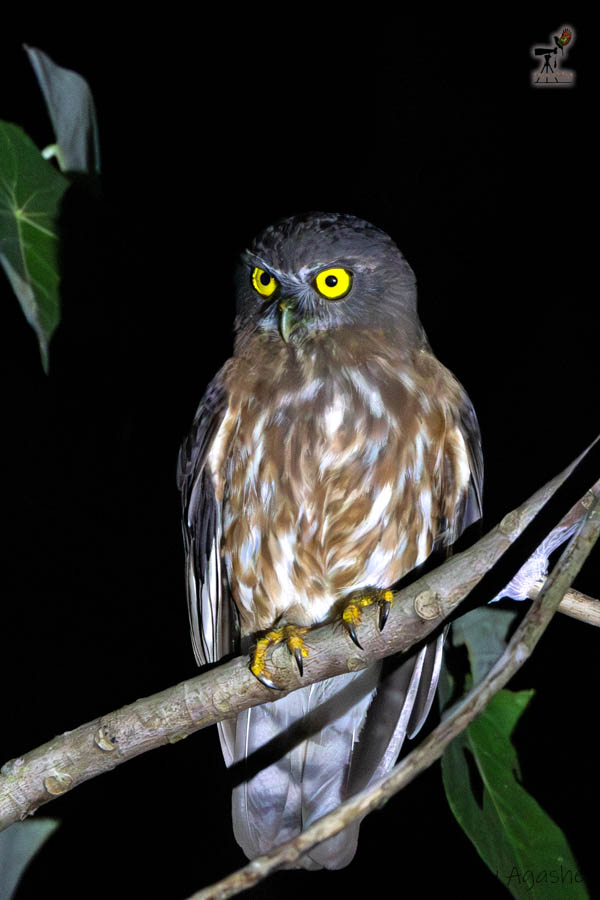
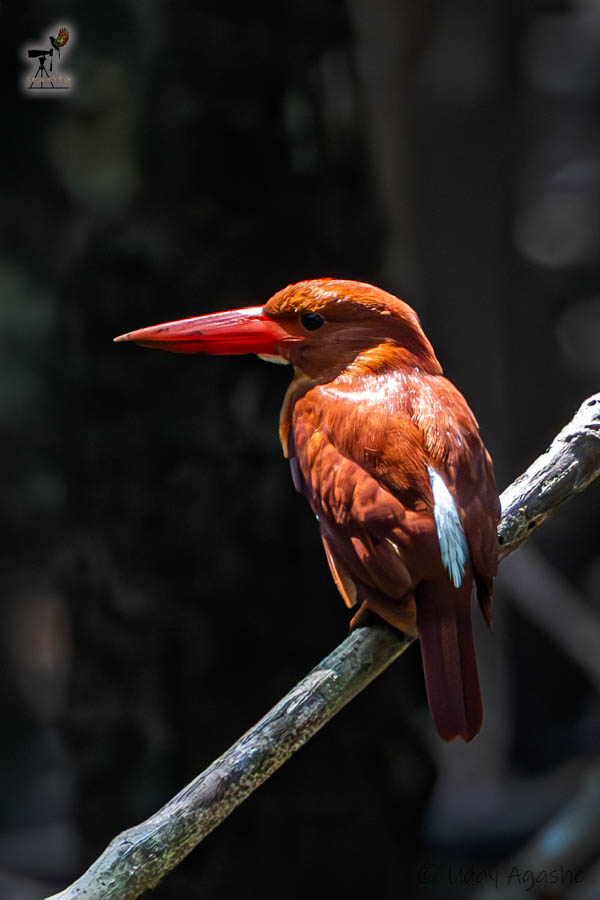
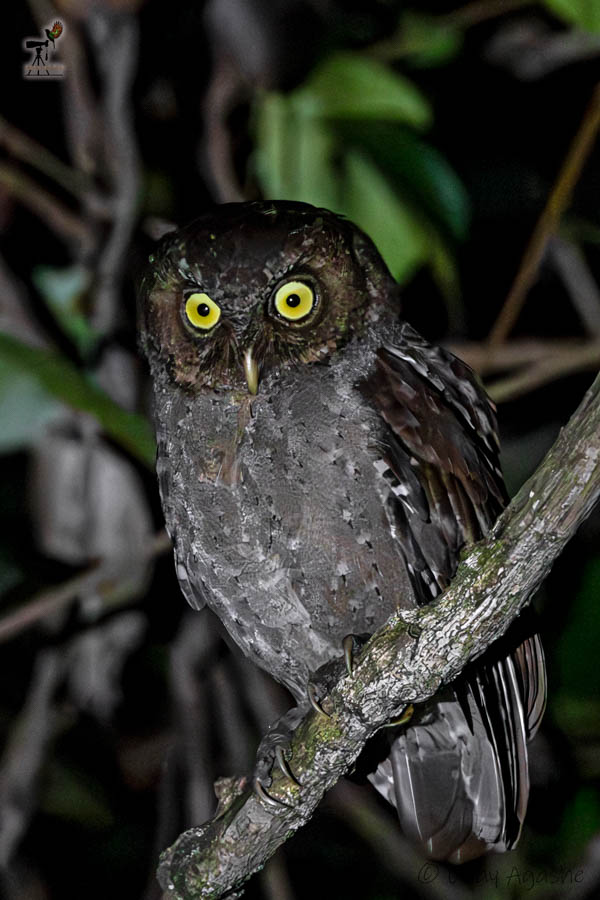
We spent that evening and the next full day on the main island searching for some of endemics. Here are a few of the highlights.

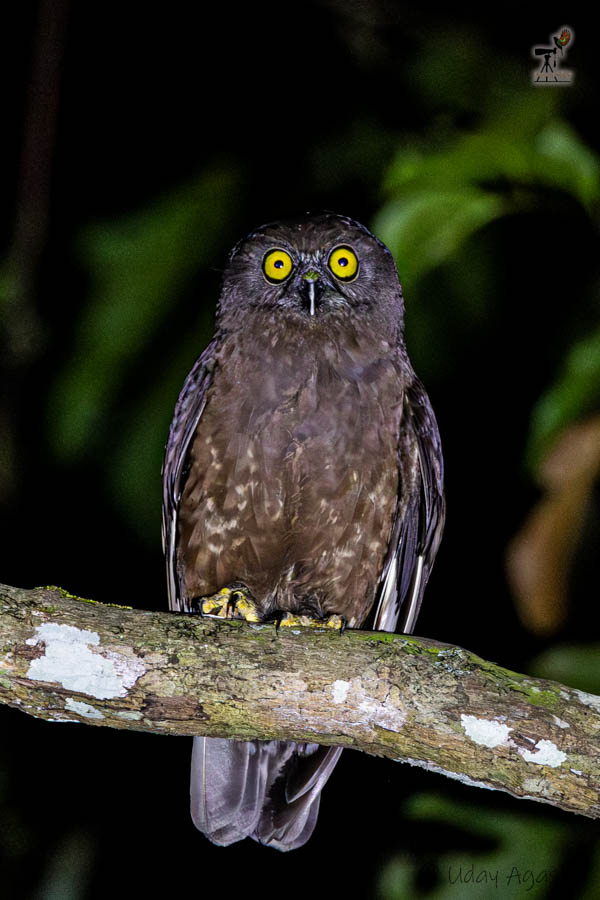
Journey to Little Andaman
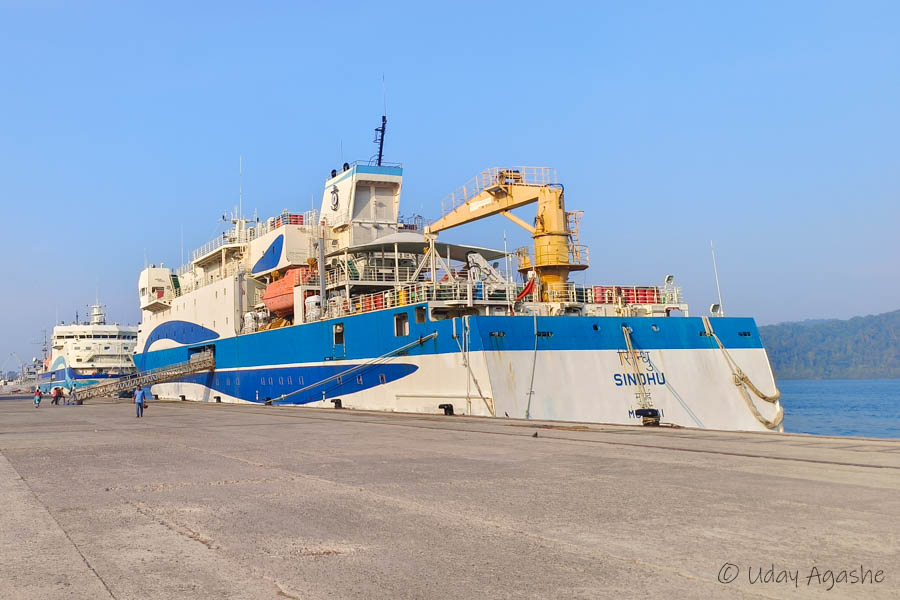
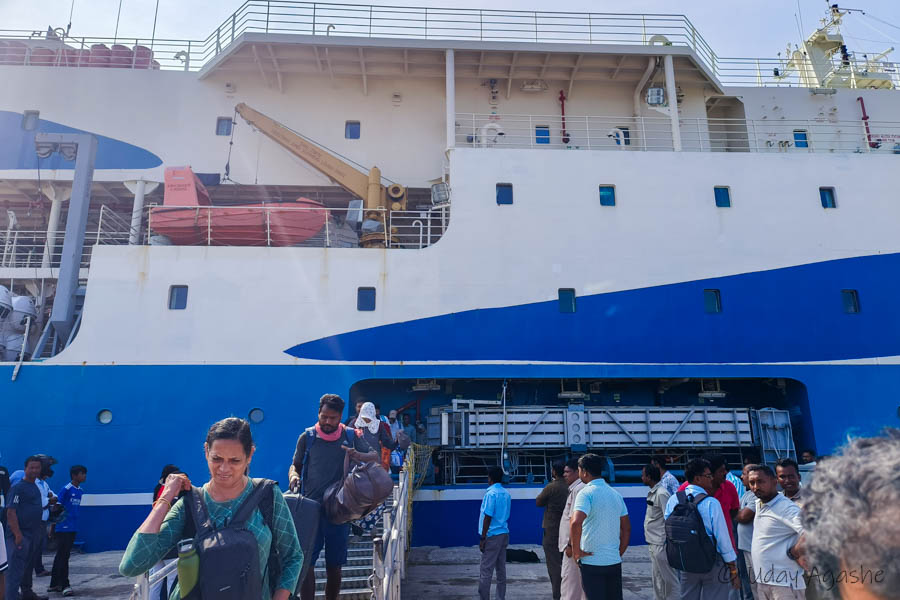
Reaching Little Andaman required a six-hour boat journey. Our ferry was scheduled for 8 am, and the previous day, we were told that Vikram would join us for this leg.
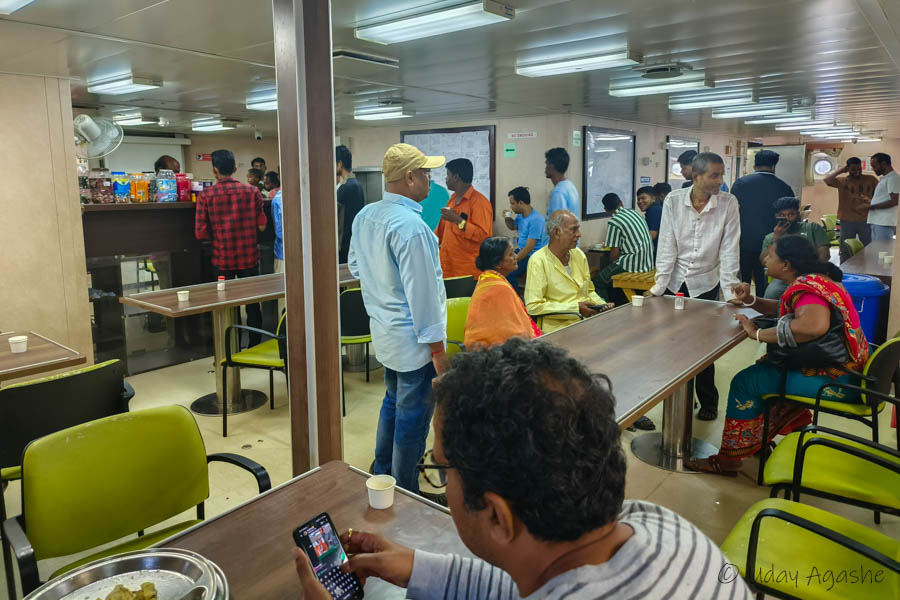
The boarding process felt somewhat like an airport, with ticket checks, ID verification, and security scanning, though without the usual baggage segregation. We arrived early, giving us time to explore the vessel.
The boat itself was quite comfortable. A small cafeteria took care of breakfast, and the rear deck remained accessible even during the journey, a good place to watch the open sea.
Somewhere out in the open sea came an unexpected sighting, not a bird this time, but a flying fish. Not truly flying, of course, but gliding above the water surface to evade predators. Small, silvery, and remarkably quick, they looked like tiny projectiles skimming across the sea. Definitely something to try and photograph next time.
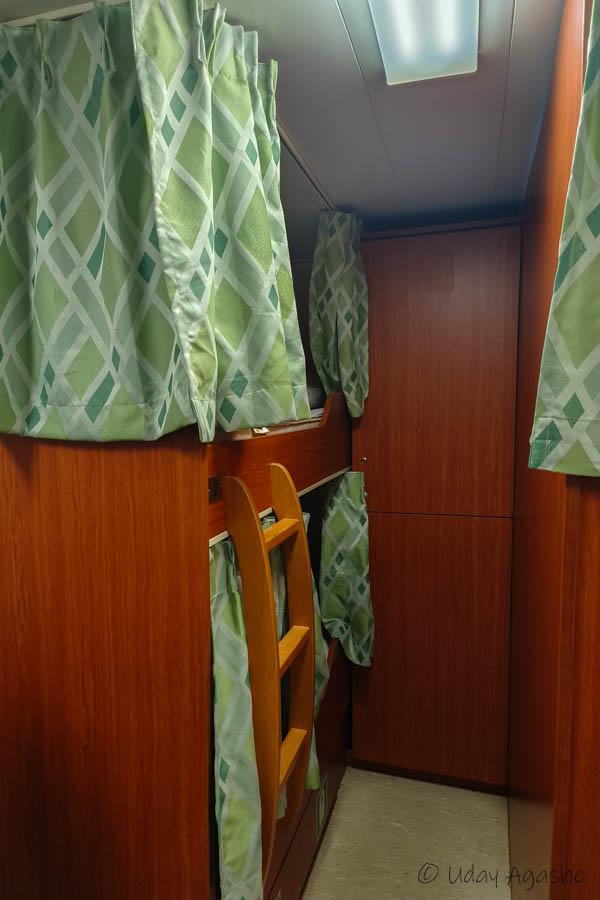
I had some apprehension about the journey due to seasickness. But the large vessel (six decks) and calm sea made it far more comfortable than expected. Vikram had arranged a private cabin for the four of us, compact but well-designed, with bunk beds, a small seating area, and an attached bathroom.
We reached on schedule. A rather old gypsy was waiting to pick us up, and, as it turned out, would be our ride for all birding in Little Andaman.
By the time we checked in and got ready, it was already around 3:30 pm. With limited time left, we skipped the beach stretch (our primary target area) and opted for a short birding session nearby.
Search for the elusive…
The next morning began early, at 5 am. The beachside forest was some distance away. Interestingly, a small tea shop near our hotel was already open, a quick cup of tea with khari biscuits worked well as a start.
I had mentioned earlier about our ageing gypsy, and it soon began to show its character. The battery had completely died, and the only way to get it started was by pushing it. So every time we stopped, we had to repeat the exercise. (I suppose this is one advantage older vehicles still have!)
The initial stretch of road was manageable, but beyond that it quickly deteriorated into a series of trenches, some shallow, others deep enough to require careful navigation. Combined with the open vehicle, it meant holding onto the frame throughout the ride.
A bit of rain in the preceding days had made things worse, but our driver handled the conditions well. Unlike the 4WD gypsies we are used to in tiger reserves, this one was far less capable on paper, making it all the more remarkable that we didn’t get stuck in any of the muddy patches.
Clara mentioned that until a few years ago, this entire stretch had to be covered on foot. In that context, even this ride felt like an upgrade.
Once we reached a denser patch of the forest, we stopped. From here on, we proceeded on foot in search of the Nicobar Pigeon. Along with the five of us, Kishore joined as an additional pair of eyes, his task being to scan the beach separately for the Beach Thick-knee.
To give a clearer picture, here’s a map of the area:
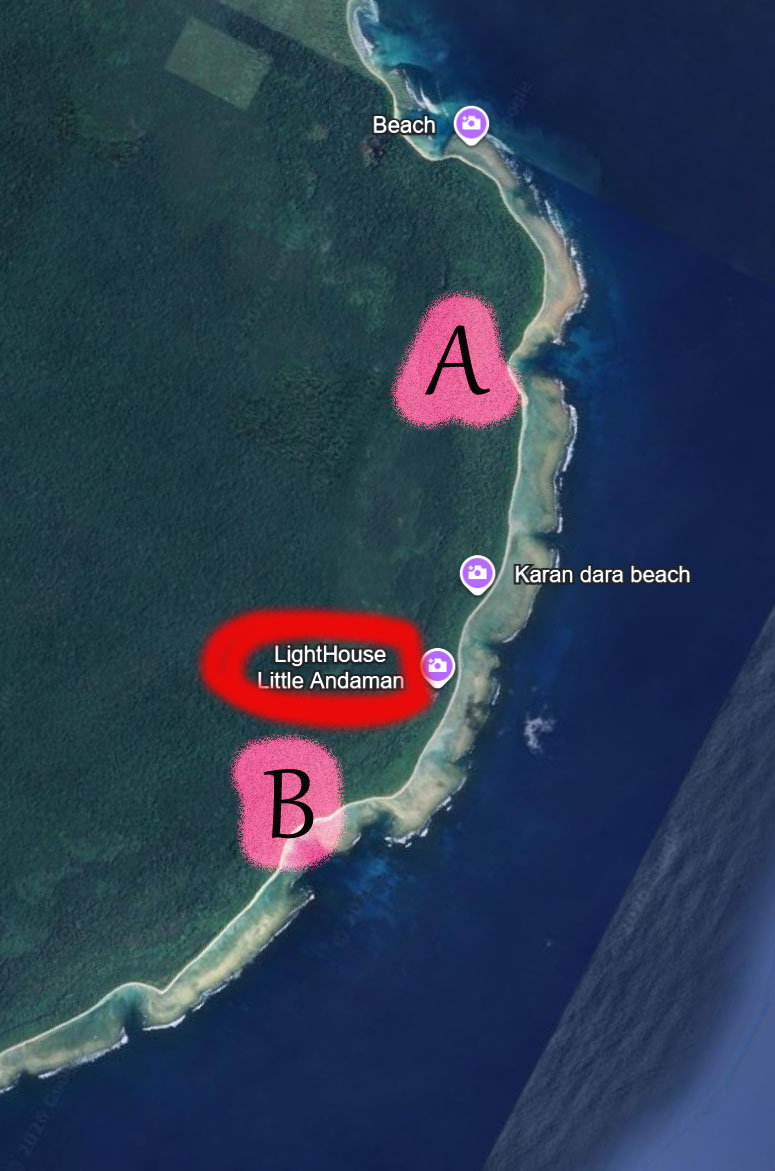
We started near “Point A”. Kishore moved along the beach, while we continued through the forest, with a plan to regroup near the lighthouse.
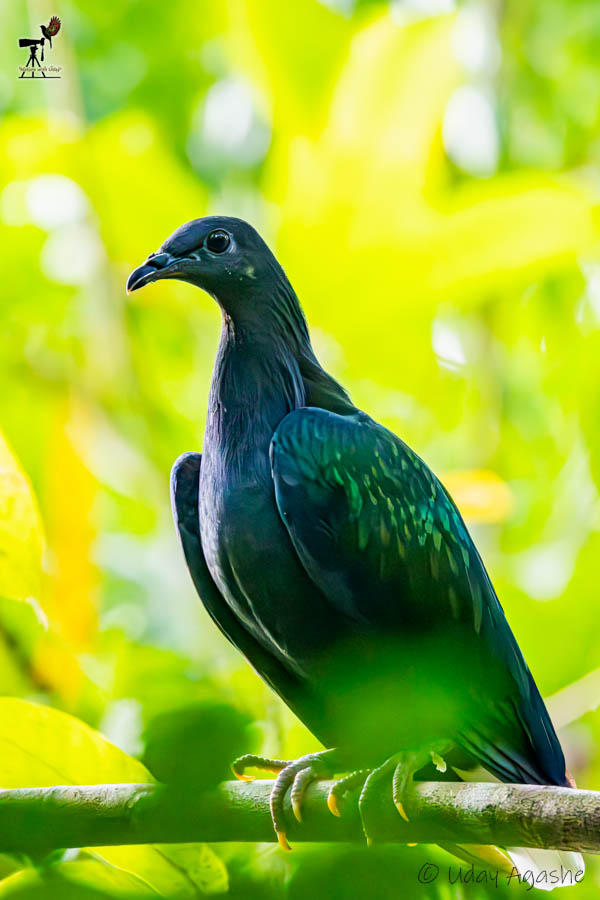
Silence was key. The Nicobar Pigeon is extremely sensitive, and even slight disturbance can send it off.
The walk stretched on, a couple of kilometres perhaps, but sightings were minimal. There was one brief glimpse, just enough for a record shot.
By the time we approached the lighthouse, Kishore had already rejoined us. Unfortunately, he hadn’t spotted the Thick-knee.
Still, Vikram remained confident the bird was somewhere nearby. Since one stretch had already been covered, we moved towards the remaining section, Lighthouse to Point “B”.
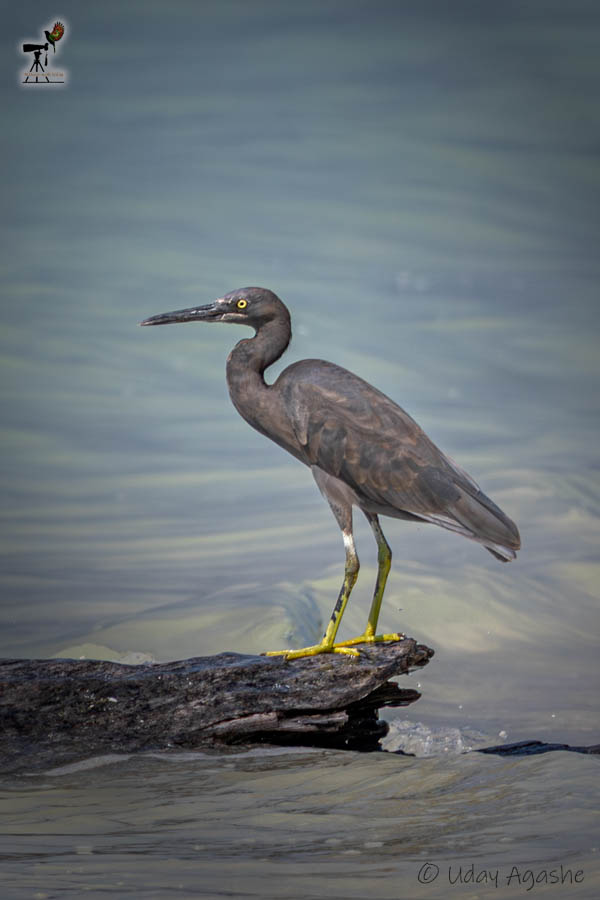
Walking on the beach is never easy, and by then the sun had started to get harsh. Still, we followed Vikram’s brisk pace. A few Pacific Reef Herons and flocks of waders kept us engaged, but the Thick-knee remained elusive.
The walk back to the lighthouse was exhausting. Hunger had also begun to set in, so we unanimously decided to have breakfast there.
Post breakfast, we drove back towards Point “A”. It was already late for any meaningful pigeon activity, so we focused once again on the Thick-knee.
From the drop-off point, it was about a 300-metre walk through forest cover to reach the beach, not a very easy stretch.

This time, Vikram and Kishore moved ahead to scan. They returned quickly, with positive news.
The plan was to approach through mangroves instead of the open beach. The tide had risen, so going barefoot was the only option.
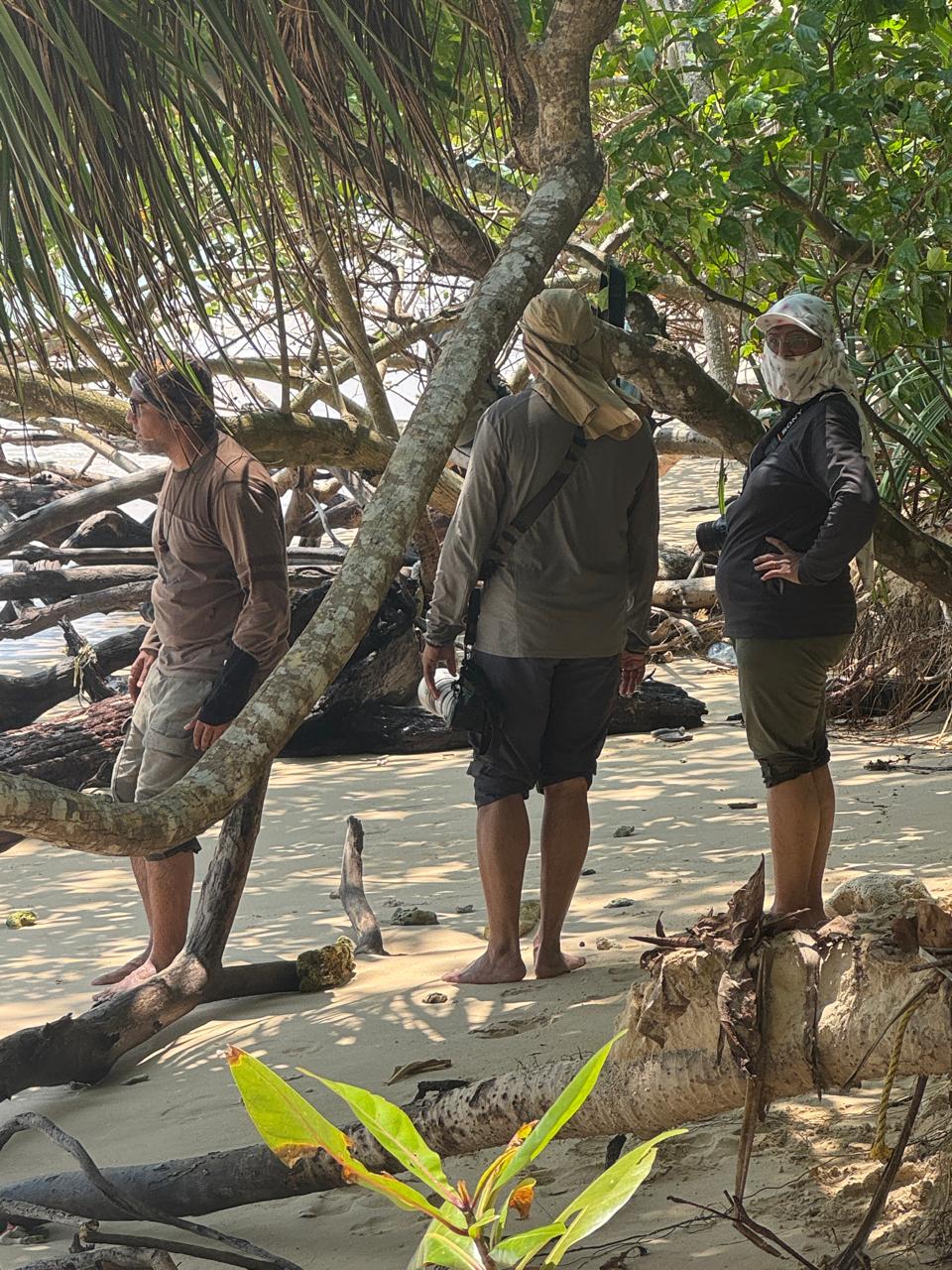
There wasn’t much time to deliberate. Vikram wanted us to move quickly before the opportunity was lost. With his and Kishore’s help, three of us carefully navigated through the mangroves.
The conditions were challenging, strong waves, unstable footing, and sharp shells carried by the water hitting against our feet.
As we emerged from behind the mangroves and were about to step onto the open beach, we noticed two fishermen approaching from the opposite side.
Vikram rushed ahead, only to realise that their movement had already flushed the bird.
The disappointment was immediate. After all the effort, the bird had slipped away just moments before we could see it.
Vikram was understandably frustrated. But in truth, there was no one to blame, the fishermen were simply going about their day, unaware of our quest.
The Last Attempt
At that point, it felt like the opportunity had passed. The next morning seemed like the only remaining chance.
But Vikram wasn’t ready to call it off just yet. His logic was straightforward, the bird had to be somewhere nearby. One final attempt was worth it. Tired as we were, none of us wanted to leave without giving it one last try.
We drove back towards the lighthouse and began yet another walk along the beach, this time under the harsh afternoon sun.
Morning hours are usually the most productive for birding, and we were well past that window. Expectations were low. I slowed down my pace, letting Vikram move ahead to scan the area. If he found the bird, we would be called anyway.
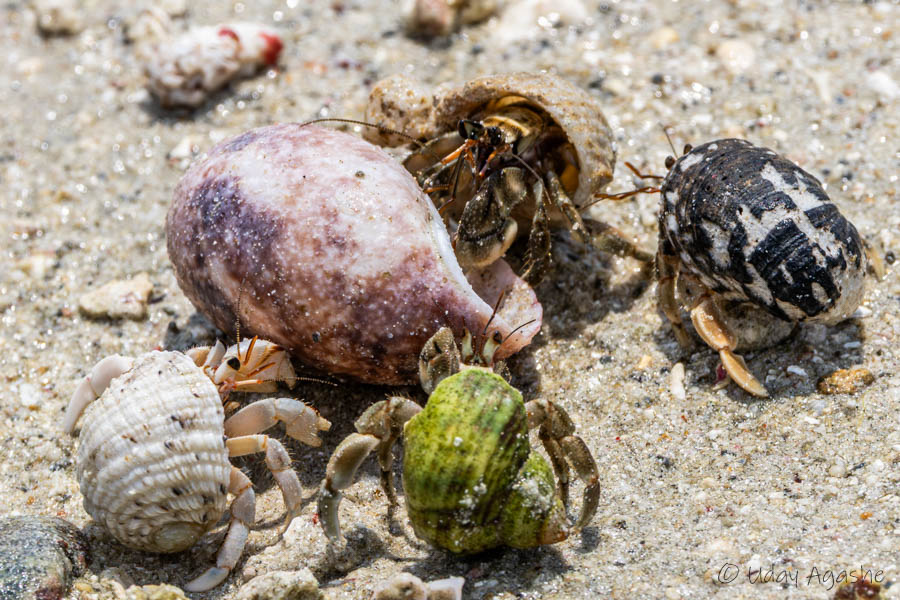
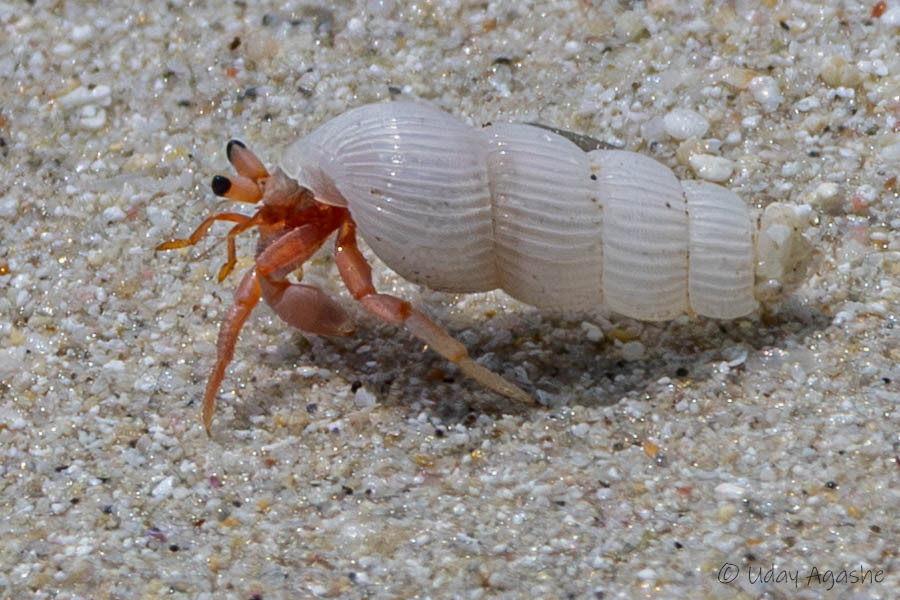
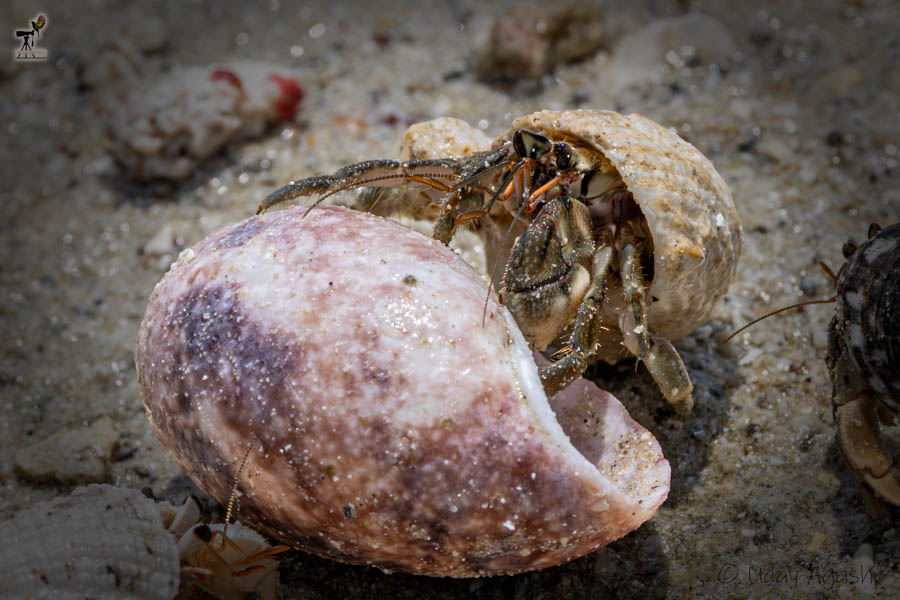
Along the way, Santosh drew my attention to something interesting, the shells scattered across the wet sand. As the tide had receded, a wide stretch of rocky and sandy terrain was exposed. On closer inspection, many of those “stationary” shells were actually moving. These were the Hermit crabs.
There were several of them, each occupying a shell of a different size and shape. Fascinating little creatures. I decided to spend some time photographing them while the others moved ahead. At one point, I even witnessed a brief skirmish, one crab attempting to dislodge another from a better shell.
They were extremely sensitive to movement. Every step I took would freeze them instantly. So, I slowed down, waited, and managed to capture a few moments, even some videos.
That quiet engagement was suddenly broken by distant shouts, Vikram’s voice, followed by Santosh relaying the excitement.
The bird had been found.
All fatigue vanished instantly. I almost broke into a run across the sand, finally putting those daily morning walks to some practical use.
Vikram had gone all the way to the far end of the stretch and found nothing initially. But on his way back, he scanned the now-exposed rocky section and spotted the bird standing there.
We reached the spot and raised our cameras, only to realise how far it still was. Even with our telephoto lenses, the bird appeared quite distant.
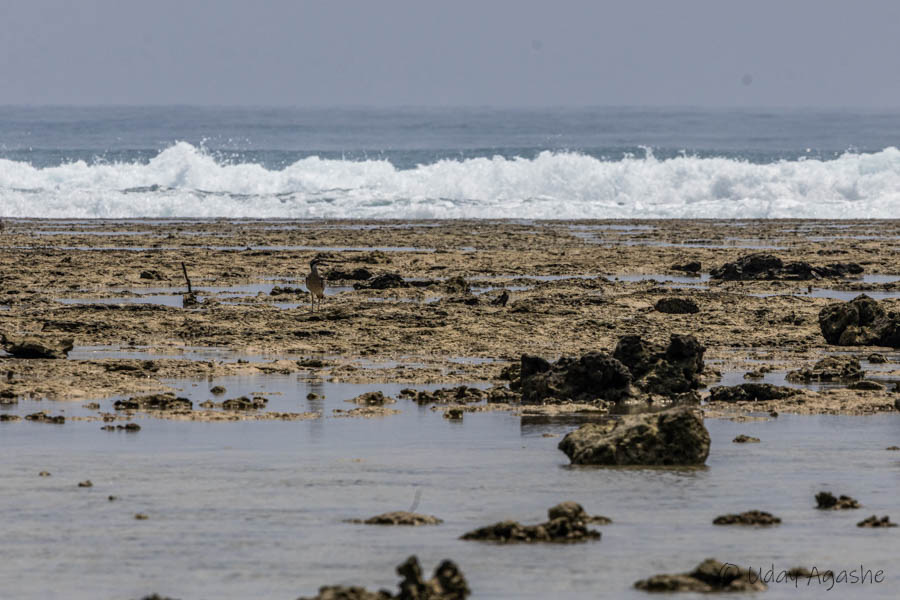
For a lifer, even that record shot would have sufficed. But Vikram had other plans. He asked us, once again, to remove our shoes.
The idea was to approach the bird slowly through the shallow water, getting as close as possible without disturbing it. We had already experienced the discomfort of sharp shells and unstable footing earlier. This time, it would be even trickier, uneven rocks, slippery surfaces, and waves adding to the challenge.
But the chance of getting better views was too tempting.
We followed Vikram carefully, placing each step with caution. Every few metres, we paused to take a few shots, aware that the bird could take off at any moment.
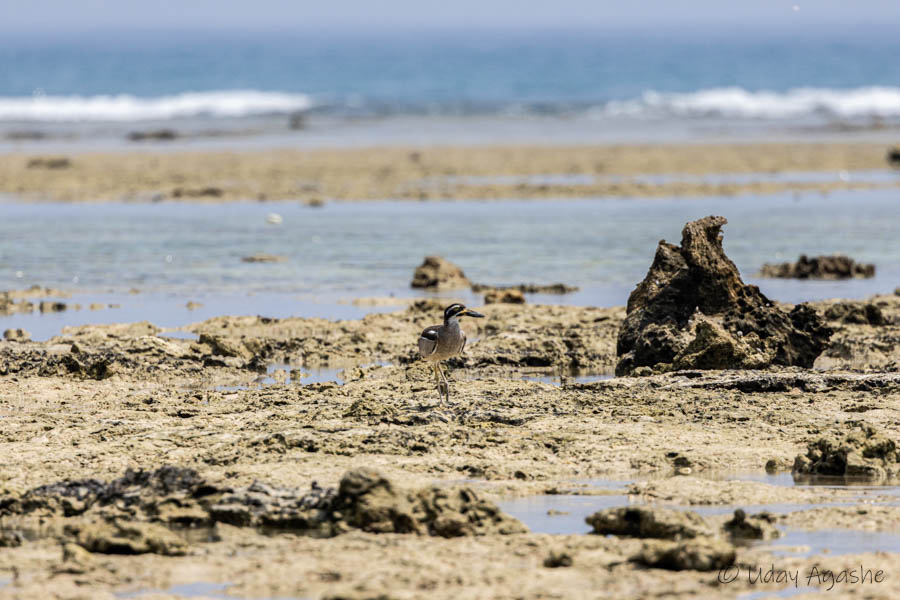
Since we were already committed to the approach, we adjusted our path slightly to improve the angle, trying to keep the sun behind us for better light.
Progress was slow, but steady. By now, we had covered a considerable distance. For perspective, the beach where we had left our shoes was now far behind.
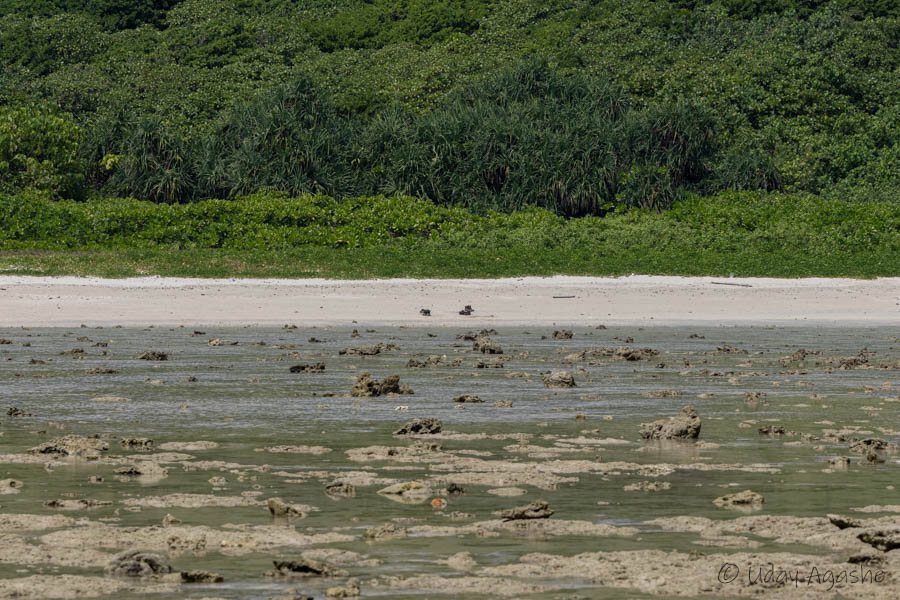
The effort paid off. The bird was now much clearer, and we began getting some satisfying frames. Santosh, as always, was focused on extracting the best possible composition.
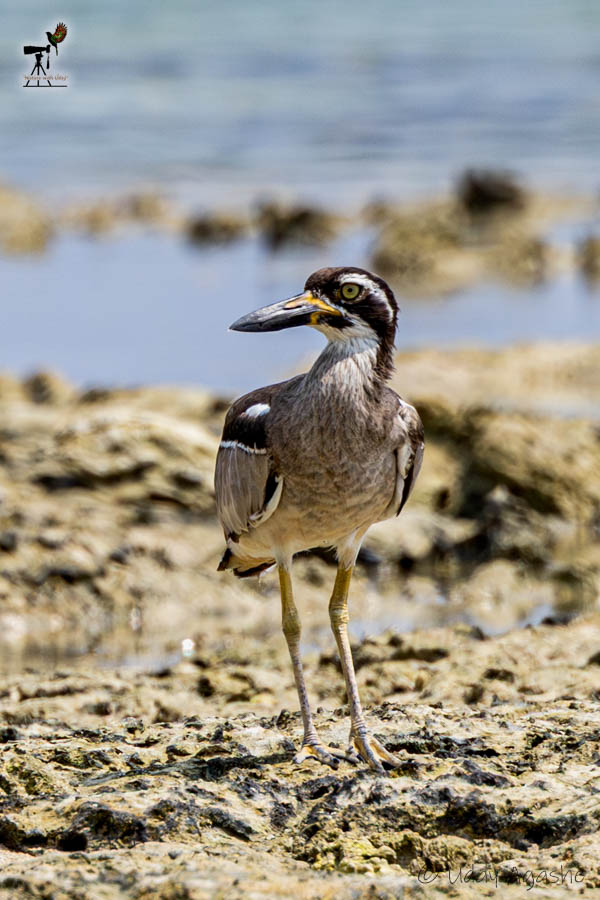
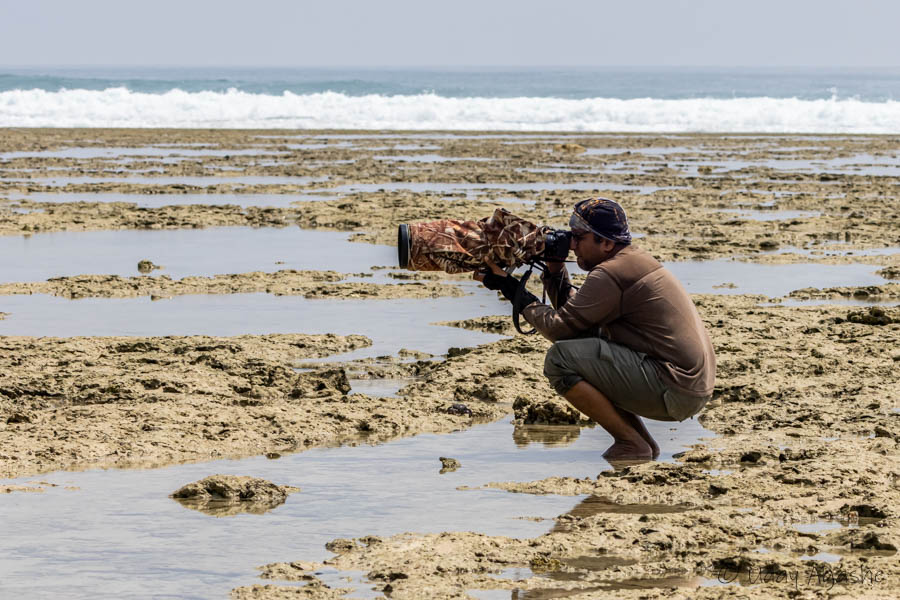
We were already delighted, thanking Vikram for his persistence, when the Thick-knee decided to reward us further.
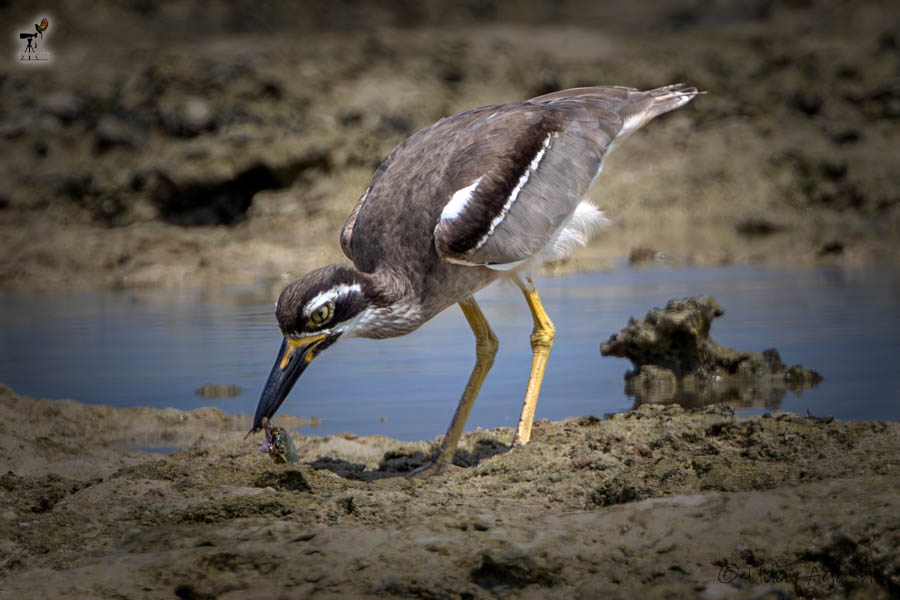
Until then, it had remained mostly stationary. Suddenly, it became active, probing among the rocks. Within moments, it caught a crab.
The bird methodically handled its prey, breaking it down before finally consuming it, all while we stood there, cameras clicking in quiet excitement.
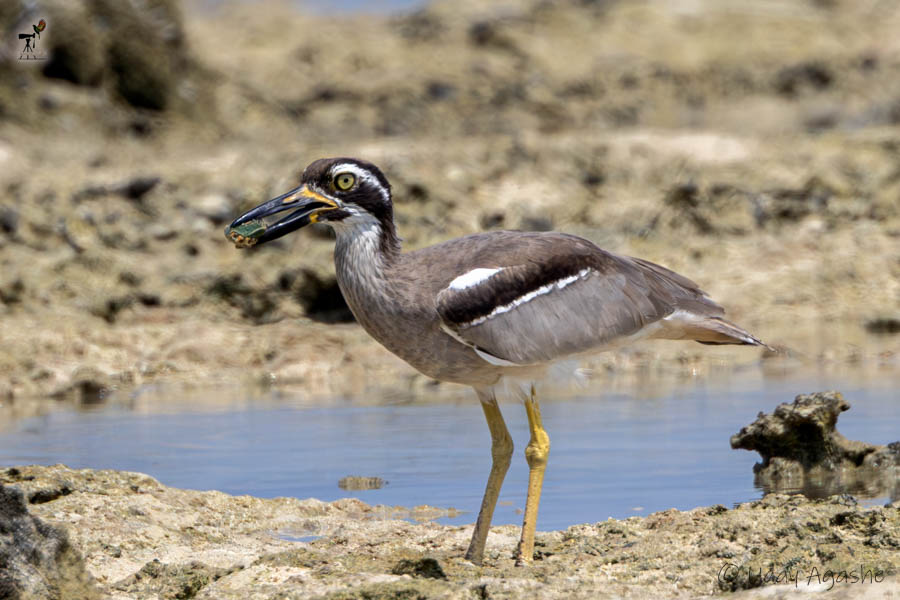
That was the moment.
After all the uncertainty, effort, missed chances, and physical challenges, the sighting felt truly earned.
We made our way back slowly, this time with a sense of quiet satisfaction.
Few Last Words
The next morning brought its own rewards, including the Nicobar Pigeon and a few more special sightings, but that’s a story for another post.
Sometimes, it’s not just about the bird, but the journey to find it. The missed chances, the rough rides, the aching legs, and the final moment when everything falls into place
The Beach Thick-knee gave us exactly that, not an easy sighting, but a memorable one.
And perhaps, that’s what makes it special.
Leave a Comment
Comments
As usual, this can be a valuable guide if we are to attempt this journey!!
Nicely written Uday with Amazing photos
After reading these, I feel like going to some such outings.
Extra ordinery way of sharing story with great heart. You are an example of corageous skillfull human being , who correctly enjoy the life in nature. Your heading of the story , we almost gave up and last attempt changed everything. Inspiring.
Nicely written n photos are amazing.
Informative too
I am reading but my mind is playing the visuals nice writing ....khudos to the Vikram,Clement and the whole team...
Fantastic. Felt like being there with u.
No words are enough to admire this. I felt as if I was walking with your group. Very well written—almost like a script.
You did manage a great shot, Uday. The description was so immersive that I could imagine the pains you took.All is well that ends well. Bravo!
Toooo good write up . That is one place I want to visit I want to do scuba diving there
Your write up nicely captures the entire journey behind the photograph. Your planning, the struggle, waiting, the setbacks and the unwavering determination is very impressive !!
Wonderful quest and reward
Very nice as usual 👌👌
well documented birding venture with clear beautiful photos.
Wow, great outing 😍
Uday, you are a great story teller 👍
I could feel as if I was traveling with you. Beautiful 👌
Excellent blog throughly enjoyed
Nice write up , Uday 👌👌
Nice read Uday
Nice blog 💐
Just read the blog. Excellent. 3 Pic of Beach Thick Knee were clear. Lovely work.
Nice write-up...keep it up Sir